+31 20 820 3777
 Compliance & KYC
 Support
 Documentation

 Login



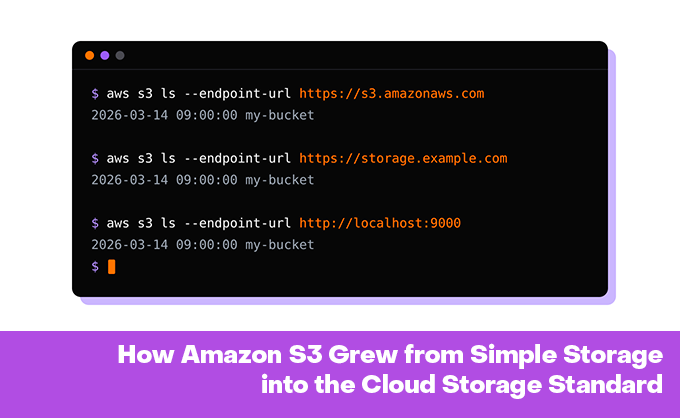
In 2006, Amazon S3 fit into fifteen racks and could perform only two operations, but today its interface is replicated by storage providers that have nothing to do with Amazon. Drawing on engineers’ recollections and AWS documents, we trace how the service changed, where it broke, and which twenty-year-old design decisions became standard for all S3-compatible storage.
Read more