



 +31 20 820 3777
 Compliance
  Support
  Documentation
 Login
Login 


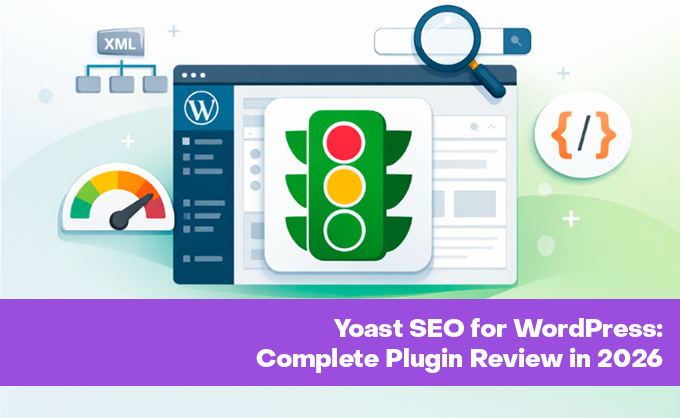


Yoast SEO is installed on over 10 million WordPress sites. It is the most widely used SEO plugin in the WordPress ecosystem, by a significant margin. The first version appeared in 2010, and in 2021 the company was acquired by Newfold Digital. More guides, video tutorials, and courses have been written for it than for any competitor. In 2025, the paid plan was significantly updated, merging previously separate modules into a single subscription.
In this article, we will examine its features, pricing plans, and what sets it apart from competitors in detail.
Yoast SEO. Overview
History and Popularity
Joost de Valk's first SEO plugins for WordPress appeared in 2007. In October 2010, he combined them into a single plugin, WordPress SEO (later renamed Yoast SEO), and founded the company Yoast BV. According to the official page on WordPress.org, the plugin is currently active on over 10 million sites. It is the most common SEO plugin in the WordPress ecosystem by a wide margin. A practical consequence of Yoast's popularity is that more guides, video tutorials, and courses have been written for it than for any other WordPress SEO plugin. For a beginner learning from external materials, that is a real advantage.
Free Version and Paid Plan
The free version covers the basics: page titles and descriptions for search engines, an XML sitemap, basic structured markup with over 50 schema types, readability analysis, breadcrumbs, and search result previews for desktop and mobile. It works with the Gutenberg block editor, the Elementor page builder, and several other visual editors.
The Yoast SEO Premium paid plan costs €9.90 per month with annual billing (€118.80 per year excluding VAT) for one site. An important change in 2025 is that Premium now includes modules for WooCommerce SEO, Local SEO, Video SEO, and News SEO. Previously, each module was sold separately. The paid plan also adds integration with Google Docs, which lets you optimize content as you write, without switching between tabs.
Pricing in Different Scenarios
Yoast uses a per-site licensing model. Each site is billed separately at a flat rate of €9.90 per month (€118.80 per year excluding VAT). There are no multisite discounts.
Here's how that looks in practice. One site: €118.80 per year. Five sites: €594 per year. Ten sites: €1,188 per year. For comparison, Rank Math PRO covers an unlimited number of personal sites for $95.88 per year, and AIOSEO Pro covers 10 sites for $199.50 per year. The difference multiplies as you scale up.
Key Features
This plugin offers a fairly wide range of features:
- Readability analysis based on the Flesch-Kincaid formula.
- Inclusive Language Analysis (checks text for discriminatory or exclusionary phrasing) — a unique feature among the plugins considered.
- Schema entity graph: unified, linked markup across the whole site, with over 50 schema types.
- A traffic light system for rating the SEO quality of a post.
- Redirect Manager, with automatic suggestions in the paid plan.
- Bot Blocker for specific AI crawlers, such as GPTBot (OpenAI), CCBot (Common Crawl), and Google-Extended (Google's AI-training crawler). This is available only in the paid plan.
- llms.txt file generator. AI-powered generation of search engine titles and descriptions is also available without limits in the paid plan.
- Integration with Semrush (keyword research) and Wincher (rank tracking).
- A Google Docs add-on that lets you optimize text as you write.
- Cornerstone content tools for highlighting and promoting your most important pages.
Performance
According to independent tests from 2026 (raadmeerblog.com, supawrite.com), Yoast turned out to be the heaviest of the three plugins considered. The codebase is around 97,000 lines, and the plugin folder is about 32 megabytes. On each page request, the plugin adds roughly 1.62 megabytes to RAM consumption and about 0.18 seconds to load time.
Yoast has no modular architecture. All features run constantly, even when they aren't used. On sites with thousands of posts, the plugin accumulates metadata in the wp_postmeta table, which slows down database queries over time. The dashboard noticeably lags on large projects when the analysis panel is open.
With a caching plugin (WP Rocket, LiteSpeed Cache), the impact on speed for visitors drops, but on budget virtual hosting with limited RAM the difference is noticeable. How critical that is in any given case depends on the infrastructure.
Migration
Since 2025, Yoast has supported built-in data import from Rank Math and AIOSEO. Previously, switching to Yoast required third-party solutions. Moving in the other direction is even easier: both Rank Math and AIOSEO offer one-click import with full transfer of titles, descriptions, structured markup, and redirects.
Before any migration, it makes sense to back up the database, record current rankings for key pages, and test on a staging site. After the move, completely remove the old plugin, check the sitemap, and verify redirects. Minor ranking fluctuations usually stabilize within 2–4 weeks. If they don't, you probably have duplicate metadata or markup conflicts left somewhere.
Pros
The largest ecosystem of documentation and learning materials. The entity graph offers a technically rigorous approach to structured data that experienced SEO specialists appreciate. Readability analysis is useful for content teams without a dedicated editor. A stable product with over 15 years of history and predictable behavior. Since 2025, the modules for online stores, local search, and video are included in Premium at no extra charge. AI tools are available without limits in the paid plan. A bot blocker for managing AI crawler access.
Cons
It isn't without drawbacks. The codebase is noticeably heavier than competitors'. According to independent performance tests, Yoast adds about 0.18 seconds to load time, versus 0.09 seconds for Rank Math. There is no modular architecture; all features run constantly, even unused ones. The per-site license makes the product expensive when you manage multiple projects. Users regularly note an excess of ads for Yoast's own products in the dashboard. The dashboard slows down on large sites when the analysis panel is open. Redirects and 404 error monitoring are locked behind the paid plan, whereas they are free in Rank Math.
Who It's For (and Who It Isn't)
Yoast is a logical choice for those starting out with WordPress who want access to the most learning material. The easy-to-read traffic light system lowers the barrier to entry. It is arguably the most documented plugin in the ecosystem.
It's a different story for large media projects with a development team, where strict, predictable schema markup matters. Some technical SEO specialists like Yoast's entity graph for its consistency.
For a single site without tight budget constraints, Yoast in its 2025–2026 form has become noticeably more capable. With the modules for online stores, local search, and video included, the package looks different than it did a year ago.
That said, there are scenarios where Yoast probably isn't the best option. If your budget is limited and you need to manage multiple sites, the per-site model quickly gets expensive. If performance on budget hosting is critical, look at Rank Math and its lighter codebase. If you need free redirects and 404 monitoring, competitors cover that without a paid plan. A detailed comparison of all three plugins is published in a separate article.