



 +31 20 820 3777
 Compliance
  Support
  Documentation
 Login
Login 


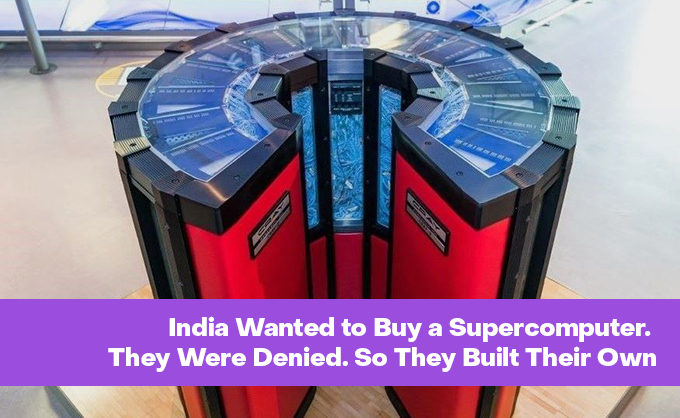


These days, when the topic of Indian IT comes up, a fairly standard set of images springs to mind. Tutorials with that distinctive accent on video hosting platforms, endless junior developers in outsourcing firms, and jokes about tech support. It’s a picture built on harmless stereotypes—vivid but not particularly deep. Behind this image lies the fact that India’s tech industry didn’t appear overnight thanks to some exceptionally efficient ministry. It’s a story of specific people and their hard work—lots of people, lots of labor. Part of this story dates back to the late 1980s, when India, under US export restrictions, began building its own supercomputers.
Last time, we wrote about Soviet youth programming clubs. Today, we’ll tell a different story, set in late-1980s India. The Indian Institute of Science (IISc) in Bangalore ordered a Cray Y-MP supercomputer from Cray (an American supercomputer manufacturer) for half a billion rupees. The contract was signed, with delivery scheduled for 1989. Cray never received the export license, the order was canceled, and three years later, the PARAM 8000 was assembled in Pune—the first Indian parallel machine with gigaflops performance.
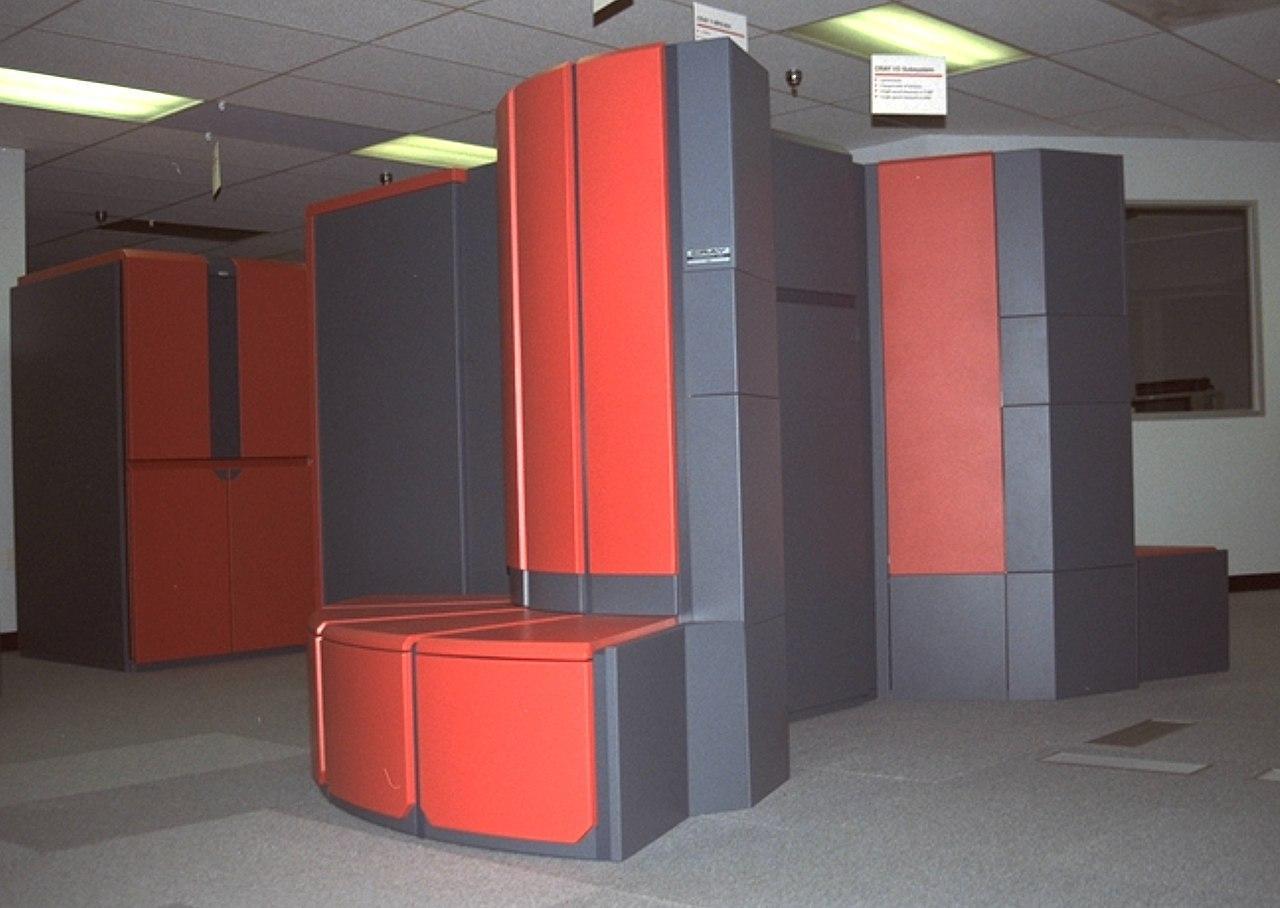
Source: Cray Y-MP Model D at NASA Center for Computational Sciences, GSFC
Let’s break down how this happened. Who made the decisions? Who built the machine? What was the context in the country? And why did they manage to build not just hardware, but also the ecosystem needed to support it, all within three years from start to finish?
Sources
The primary source for this article is V. Rajaraman’s work “History of Computing in India (1955–2010),” written for the IEEE (Institute of Electrical and Electronics Engineers) Committee on the History of Computing. From 1982 to 1994, Rajaraman headed the Supercomputer Education and Research Centre (SERC) at the Indian Institute of Science in Bangalore and chaired the commission that proposed creating the Centre for Development of Advanced Computing (C-DAC) in 1986. This is testimony from a participant, but one who was on only one side of the process. Rajaraman was the client and a member of the scientific council, not a developer. His account lacks the names of the engineers who built PARAM, as well as architectural details.
We filled in the gaps using several additional sources. The biography of Vijay Pandurang Bhatkar, who headed C-DAC, was taken from the University of Baroda page and an English Wikipedia article (a debatable source, but verifiable via footnotes). Technical specifications for the PARAM series come from a review article by A. Bhattacharjee published in 2022. The anecdote about Bhatkar’s conversation with Rajiv Gandhi and the international demonstration of the prototype is known only from a feature by Sanchari Pal in the Indian online publication The Better India (2017). This is the only text where such details appear.
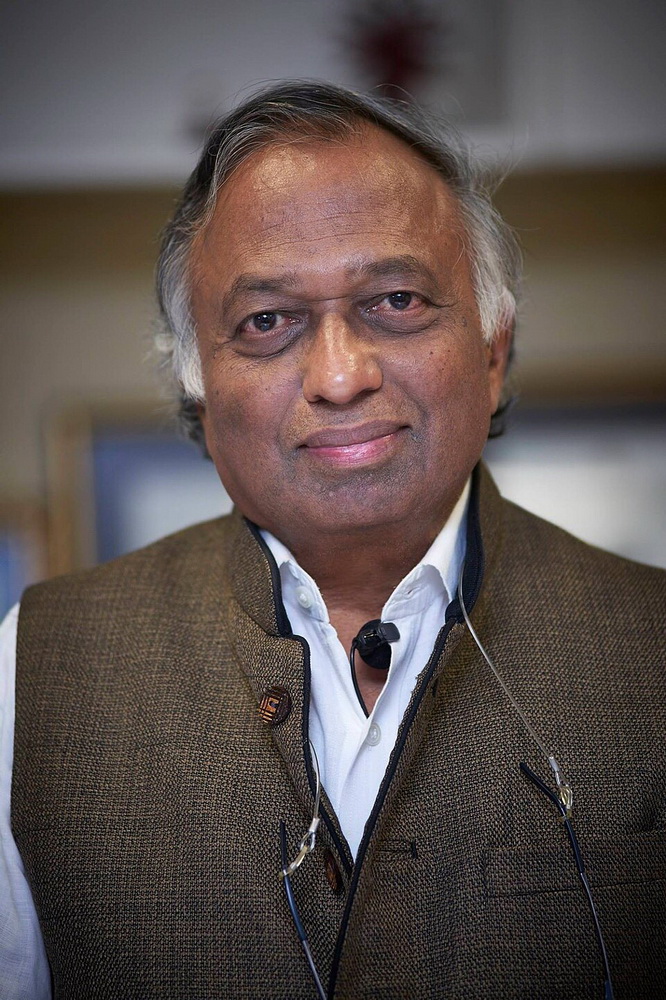
Professor Vijay P. Bhatkar. Founder and Executive Director of the Centre for Development of Advanced Computing (C-DAC), creator of India’s first supercomputer.
What Happened to the Cray Order
After India’s first nuclear test in 1974, the US imposed an embargo on the supply of advanced electronics and computers to the country. In 1978, the American computer corporation IBM left India. Access to what the West considered normal scientific infrastructure was severely limited. Supercomputers were needed for weather forecasting, climate modeling, and scientific calculations in physics and chemistry, but there was nowhere to buy them. In the West, these calculations were viewed differently. Powerful machines were needed not only for weather forecasting but also for modeling nuclear weapons and satellite programs. India had conducted a nuclear test in 1974 and had not joined any blocs, so the concerns were political. The Cold War was in full swing, and technological restrictions were part of it.
In this context, the Indian Institute of Science in Bangalore received 500 million rupees from the Ministry of Human Resource Development to create a supercomputing center. At the exchange rates of the time, this was about $41 million—a significant sum for Indian science. The institute already had a computer center (the Computer Centre), founded in 1970 and later renamed SERC in 1990. It was headed by Rajaraman, who was invited from the Indian Institute of Technology Kanpur (IIT Kanpur) in the early 1980s as one of the country’s leading computing specialists. Working with him was N. Balakrishnan, a specialist in aerospace and high-performance computing, who would later succeed Rajaraman as head of SERC.
Today, Balakrishnan leads India’s active National Supercomputing Mission (NSM), so the SERC lineage extends to government programs of today. It was Rajaraman and Balakrishnan who joined the national committee tasked with selecting a machine for the new center. The committee visited two American companies and one Japanese firm, evaluated the options, and settled on the Cray Y-MP as the primary machine. It was the best vector supercomputer of its time. Front-end computers and high-performance workstations were planned to complement it.
The contract with Cray was signed, and the installation date was set for 1989. A delegation from the US State Department visited the institute to discuss the terms of use for the future machine. Everything was agreed upon, and it seemed like a matter of technical execution. Cray itself was confident it would receive the export license without issues, given that negotiations had gone smoothly.
Then things got murky. By the date specified in the contract, the license had still not been issued. The order had to be canceled. In Rajaraman’s text, this episode is described dryly, in two sentences. Over three decades, the sharpness has worn off. In 1989, this was a serious blow to the institute. The entire architecture of the future center was built around one large vector machine, and suddenly it was gone. Today, Rajaraman’s colleagues at SERC speak more directly about this in retrospect than he did. The rejection by Cray was one of the last episodes of the Cold War, playing out in a specific institute in Bangalore.
They had to pivot on the fly. Instead of one large vector machine, they assembled a heterogeneous park from what they could buy. The foundation was a Cyber 992 mainframe with a vectorizer—the fastest mainframe produced by CDC at the time (an American manufacturer of mainframes and supercomputers, active from 1957–1992). They added two superscalar computers, the CDC 4360 and the VAX 8810 from DEC (an American computer manufacturer, active from 1957–1998, later acquired by Compaq and then HP).
Separately, the institute pursued cluster computing. They purchased nine IBM RS6000/580 workstations without displays, each with 256 MB of RAM, connected by a dual optical fiber ring. For remote network access, they added 48 more IBM RS6000/340 workstations. Plus 24 Silicon Graphics workstations (an American manufacturer of graphical workstations, active until 2009) for visualization, modeling, and simulation.
In 1992, this setup was augmented by the PARAM 8600, an Indian-made parallel computer with 64 scalar and 16 vector processors. The story of PARAM will be the next chapter.
How C-DAC Emerged
The Cray incident was not an isolated case but another link in a long chain. Attempts to purchase supercomputers from the US and Japan repeatedly hit export restrictions. The country needed another path, its own. In 1986, the Scientific Advisory Committee to the Prime Minister, led by chemist C. N. R. Rao (Chintamani Nagesa Ramachandra Rao), formed a working commission. Rajaraman—the same man whose center in Bangalore would be left without the Cray Y-MP a few years later—was appointed chairman. The task was formulated cautiously yet seriously: it was necessary to propose methods for designing and manufacturing high-performance computers independently.
It’s worth pausing on one coincidence that is poorly visible in the chronology. C. N. R. Rao was simultaneously the director of the Indian Institute of Science in Bangalore—the very institute where Rajaraman worked and where SERC was being built. So, the person assembling a commission under the Prime Minister to find a national response to sanctions was simultaneously leading the institute that had personally suffered from those sanctions. This wasn’t a fabricated plot but a working configuration of Indian science at the time.
The commission formulated a mission-project, sounding Soviet but practical: build parallel computers with gigaflops performance and above. In March 1988, the Ministry of Electronics established the Centre for Development of Advanced Computing, or C-DAC. The location was chosen as Pune, not Bangalore, even though Bangalore had the most acute need. The initial budget was 300 million rupees.
Bhatkar, an electrical engineer from Nagpur University with a master’s degree from Baroda and a PhD at the Indian Institute of Technology Delhi (IIT Delhi), had significant experience with state technology projects by his forty-first year and a reputation for getting complex technical projects to a working state. This distinguished him from pure academics. Academics knew how to write papers; ministry officials knew how to manage budgets. People capable of doing both were few.
The mandate Bhatkar received in 1988 looked, if not impossible, then extremely difficult. Build a gigaflops supercomputer in a country where the domestic computer industry was in its infancy, within no more than three years, and cheaper than the canceled Cray. Any of these conditions alone would be enough for a sensible person to refuse to sign. Bhatkar signed and ultimately headed C-DAC for many years, overseeing the creation of PARAM 8000, 8600, 9000, and 10000.
The project was completed in July 1991. C-DAC designed and assembled the PARAM 8000 with a claimed performance of 1 gigaflop. Architecturally, it was a classic parallel computer with distributed memory, MIMD (Multiple Instruction, Multiple Data), where each processor had its own memory and nodes exchanged messages. Each node housed an INMOS T800 or T805 transputer, a British specialized microprocessor for parallel systems. The basic configuration of PARAM 8000 consisted of 64 nodes. The machine was designed so that computing nodes could be added as tasks grew, allowing the total number of nodes to scale.
The scale of what was achieved is best appreciated through a simple timeline: 1986—the commission is formed; March 1988—C-DAC is created; July 1991—PARAM 8000 is operational. Three years from formal start to a finished gigaflops machine. For a state research project in a country where the domestic computer industry was just forming, this was fast. For the same task in a better-equipped country, the timelines would have been similar.
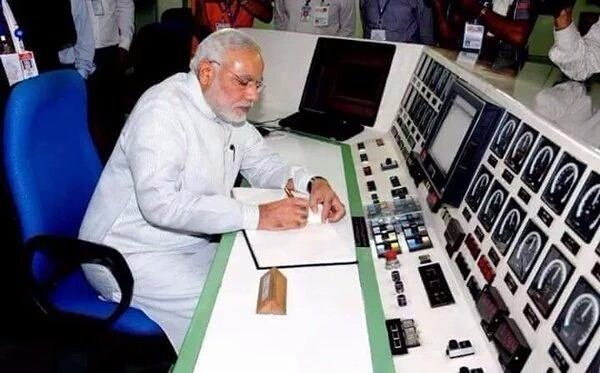
A student uses India’s first supercomputer, “PARAM 8000,” to super-fast print a Bachelor of Arts (B.A.) degree. (1990)
A Whole Movement Was Happening in Parallel
The most interesting thing is that C-DAC was not a lone initiative. Between 1985 and 1992, India saw a surge in activity regarding the design of parallel machines. Several institutions independently built their own parallel computers, some for pure research, others for applied tasks.
One such machine, FLOSOLVER, solved gas dynamics problems and was developed at the National Aerospace Laboratories (NAL) in Bangalore. Another, PACE, was built at the Defence Research and Development Organisation (DRDO) in Hyderabad. A third, ANUPAM (Sanskrit for “incomparable”), was built by the Bhabha Atomic Research Centre (BARC) in Mumbai for nuclear calculation tasks. At the Indian Institute of Science in Bangalore (IISc), the “Knowledge Based Computer Systems” (KBCS) project was underway, building inexpensive parallel computers on personal computer motherboards. About ten postgraduates from the institute defended dissertations on various aspects of parallel computing.
All these projects generated a large pool of engineers who knew how to design and program parallel systems. PARAM did not emerge in a vacuum. By the time C-DAC launched, the country already had an ecosystem ready to accept and execute the task. If the center had been created in a country where only one or two people worked on parallel computing, the story might have unfolded differently.
No universal pattern can be drawn from this; one case is insufficient. In the specific Indian case, the connection is clear. External denial of access to technology coincided with an already growing internal school, and the school was able to pick up the baton. Neither alone would have worked.
What SERC Achieved After the Cray Cancellation
Let’s return to Bangalore. By 1992, SERC had become the largest computing center in India. The machine room housed numerous heterogeneous systems, a massive library of batch software operated, the campus was connected by fiber optics, and institute scientists gained access to world-class computing resources, even if assembled piecemeal.
Rajaraman and Balakrishnan, after the dust settled, began to call the Cray rejection a blessing in disguise. The logic was simple. The money allocated for the Cray Y-MP didn’t disappear; it was spent on what was available without restrictions. Instead of one large vector machine, they got a heterogeneous park that included a mainframe with a vectorizer, a cluster of workstations with a fast optical network, graphical stations for visualization, and later, the domestic PARAM 8600.
From an architectural perspective, this turned out to be the right move. The early 1990s were the moment when classic vector supercomputers began yielding to massively parallel systems and clusters. The industry was moving in this direction quite confidently, and by the mid-decade, vector monsters like the Cray lineup had become niche solutions. By not getting Cray, SERC essentially transitioned to a more promising model earlier than it would have on its own. Whether to call this luck or a forced restructuring given a pretty name in hindsight is more of a stylistic question. The participants themselves firmly stand by the first version, and it’s awkward to dispute this from the outside.
By 2010, SERC was already running an IBM Blue Gene (a family of IBM supercomputers), three high-performance clusters, and an updated campus network. That same year, the US government finally eased export restrictions on supercomputers for India. In twenty years, the story came full circle. The country that didn't sell one machine in 1989 could buy any machine by 2010. By then, however, it didn’t really need to buy anymore, as it could already create its own products.
What Happened Next with C-DAC
The PARAM series didn’t end in 1991. C-DAC continued to build more powerful machines. In 1992, PARAM 8600 appeared; in 1994, PARAM 9000, with a Clos network architecture (a multi-stage switching network that allows scaling the number of connections between nodes) and scalability up to two hundred processors. PARAM 10000, released in 1998, was already a cluster of SMP nodes (Symmetric Multiprocessing) based on Sun Enterprise servers with UltraSPARC II processors (developed by the American company Sun Microsystems) and could deliver up to 100 gigaflops.
In 2003, PARAM PADMA was released—a machine with 248 processors, a peak performance of 992 gigaflops, and its own communication network. PADMA landed at 171st place on the Top 500 list of the world’s fastest computers. This isn’t the top ten, but making the international rating, and for a project started in 1988 as a response to sanctions, emerging on the world stage fifteen years later is a strong result.
The series continued with PARAM YUVA (2008, 69th place in Top 500), YUVA II (2013), SHAVAK (2015, a desktop-form-factor supercomputer for training), ISHAN (2016, installed at IIT Guwahati), BRAHMA (2018), SIDDHI-AI (2019–21, with a peak performance of 5.267 petaflops), and SHIVAY (installed at Indian Institute of Technology (BHU) Varanasi). From gigaflops to petaflops, over thirty years, through domestic development.
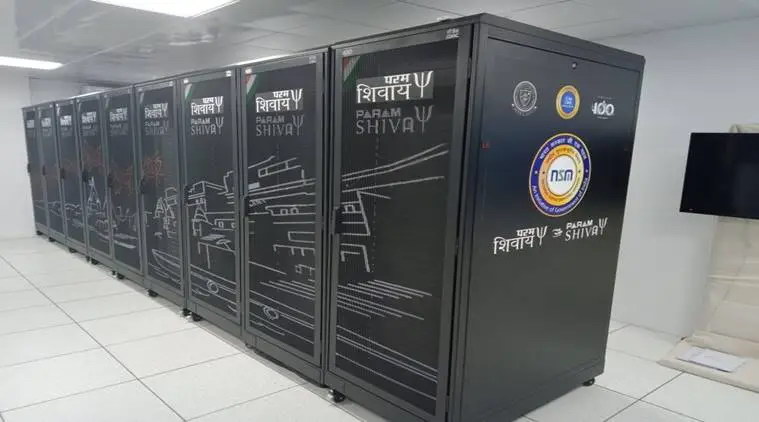
PARAM Shivay is the first domestically assembled supercomputer in India, developed under the National Supercomputing Mission (NSM).
Alongside supercomputers, C-DAC worked on what it was essentially created for: the development of computing in the broad sense. One such effort is particularly characteristic of the Indian context. C-DAC developed the GIST (Graphics and Intelligence based Script Technology) integrated circuit. The chip was mounted on an expansion board for personal computers and allowed working with most Indian scripts on ordinary PCs.
Along with this, a general keyboard layout for various Indian alphabets and the ISCII standard (Indian Script Code for Information Interchange) for uniform encoding of all major scripts in the country were developed. A country with twenty-two official languages and dozens of scripts gained the ability to work with text in native languages on mass-market equipment. This has a distant relation to supercomputers, but it well illustrates that C-DAC was never conceived as a narrow program to plug one sanction-related hole. It was a center for the development of computing in the broad sense of the task, and supercomputers were one of its directions—important, but not the only one.
What Didn’t Work
PARAM 8000 was assembled in three years, but not from Indian parts. Each node housed an INMOS transputer, a British development. Rajaraman himself writes directly about this in his review. Indian engineers knew how to design microchips for foreign clients, but there was nowhere to manufacture them in India. The country had not established foundry production. He calls this the only serious failure of Indian technology policy during that period.
In the history of PARAM, this manifests simply. The project was responsible for architecture, assembly, and software. No one was responsible for chip production. The first succeeded. The second never did. Forty years later, India is still solving the problem of domestic semiconductors.
This does not diminish C-DAC’s achievements. It shows its scale. Conditions aligned for one successful machine. Conditions did not align for creating a domestic semiconductor industry, neither then nor later, and India had to drag this task separately for another thirty years.
Conclusions from History
By the time Cray refused in 1989, SERC had already had a dedicated budget for creating a center for five years. Three years before C-DAC, a program for developing parallel computing involving five leading institutions was already active in the country. In the year C-DAC was created, the Prime Minister was Rajiv Gandhi, the scientific council under him was headed by C. N. R. Rao, and that same Rao headed IISc. The Ministry of Electronics was led by scientists. Everything aligned.
PARAM succeeded because, by 1988, the Indian system simultaneously had money, prepared people, political will, and a leader willing to take responsibility for the result. This is rare in state projects because responsibility is smeared across commissions, subcommittees, and interagency agreements, and in the end, no one is accountable.
At the end of his review, Rajaraman formulates this in one phrase: “The West’s refusal to provide advanced technologies to India did not harm it; rather, it pushed it toward self-reliance.”
Atomic energy, space, and defense research received sanction rejections and managed with their own specialists’ efforts. The only serious failure was that India did not invest in domestic microchip production in time. Sanctions didn’t work where the country was ready, but they did work where it wasn’t.