



 +31 20 820 3777
 Support
  Documentation
 Login
Login 




Late 2022. ChatGPT—an AI-powered chatbot—has been available for only a few weeks, yet editorial teams are already engaged in the familiar debate: some hail it as a revolution, others dismiss it as fleeting hype, while a third group quietly tests its capabilities, prompting it to draft emails to directors and expressing surprise at the quality of the results.
The tech industry regularly experiences such waves of enthusiasm. There was blockchain, virtual reality, and the metaverse; each time, some predicted the end of the world as we know it, only for reality to prove far more nuanced. The fundamental difference with the current AI frenzy is that the utility of neural network assistants can be tangibly experienced right now—without requiring a crypto wallet or VR headset. Marketers save an hour on copywriting, developers streamline debugging, and managers condense hour-long meetings into two-minute summaries. The underlying technology is not new; it stems from decades of research—but it has only recently become accessible and user-friendly.
This newfound accessibility naturally raises the question: why use free versions when paid tiers offer clearly superior capabilities? Several reasons exist. First, to evaluate whether a subscription is truly necessary. Second, regional restrictions on card-based payments persist, making subscription activation technically challenging for some users. Third, for many use cases, premium features are unnecessary; if you request email rewrites only once a week, a $20/month premium subscription won't yield a return on investment. Finally, the most straightforward reason: limited budgets coexist with a desire to experiment with neural networks.
This article examines what free versions of leading AI tools actually offer—not marketing promises, but concrete limits and real-world constraints. We begin with text-based assistants before moving to image and video generators.
Top Free AI Chatbots
ChatGPT (OpenAI): Feature-Rich, But With Caveats
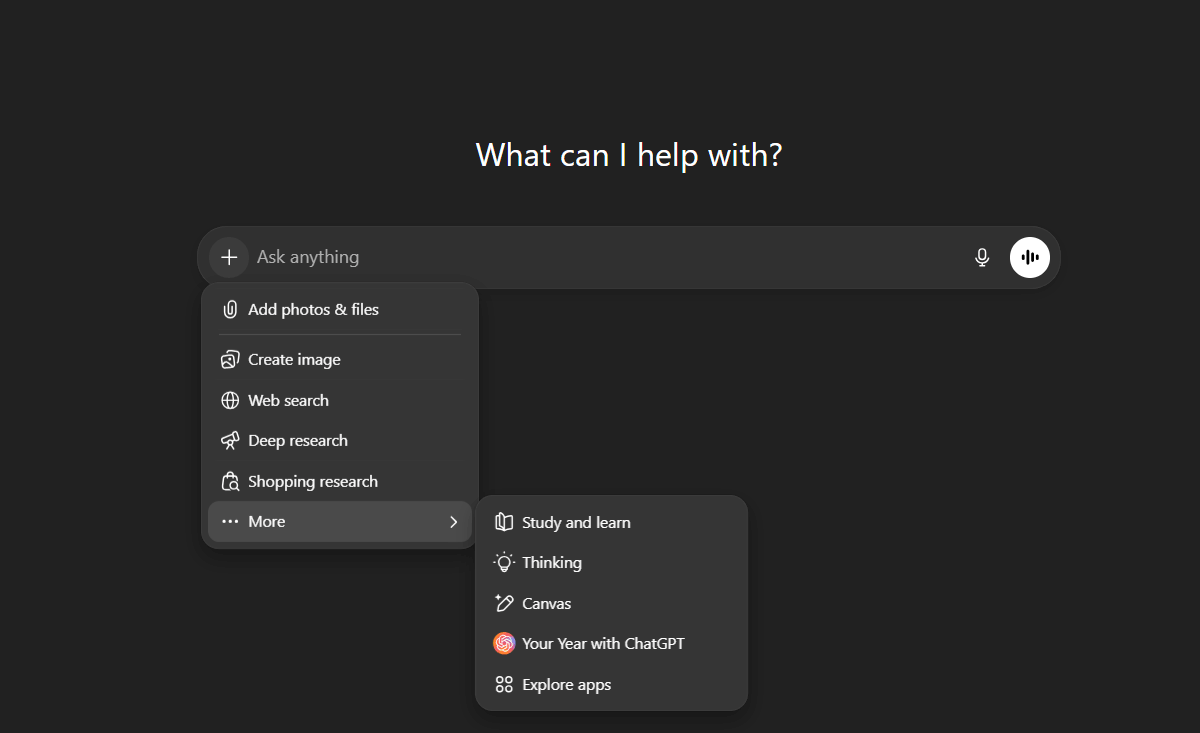
OpenAI employs a classic "freemium" pricing model: provide enough functionality to generate demand for premium tiers. The free plan offers limited access to the flagship GPT-5.2 model but imposes a significant technical ceiling—a context window of only 16,000 tokens. For English text, this equates to approximately 13,600 words; however, Russian-speaking users should divide this figure by roughly 1.6. Due to less efficient tokenization of Cyrillic characters, the actual capacity for Russian text is limited to about 8,000–8,500 words, making it impossible to load lengthy documents in their entirety. The Go tier, priced at €8 per month, increases the context window to 32,000 tokens. The Plus tier, at €23 per month, also provides a 32,000-token window but includes access to Reasoning mode (Thinking), Codex, and Sora. The Pro tier, costing €229 per month, expands the window to 128,000 tokens with unlimited access to GPT-5.2.
At first glance, the free version appears generous. The interface supports file and image uploads, image generation, web search, Deep Research, Shopping Research, Reasoning mode (Thinking), Canvas for collaborative text and code work, and a catalog of third-party apps (Explore apps). All these features are available without a subscription, albeit with caveats. At some point during the day, the system will either switch you to a less capable model or notify you that your quota has been exhausted. Image generation is functional but operates slower with a limited request count. Deep Research is offered in a reduced capacity, and cross-conversation memory is restricted. Essentially, OpenAI showcases its full arsenal while controlling the volume.
A critical nuance: for the free version and the Go tier, user data may be used to train models. Opting out is possible but requires manually navigating the settings. Starting with the Business tier, data is not used for model training by default.
Claude (Anthropic): Generous Context, Opaque Limits
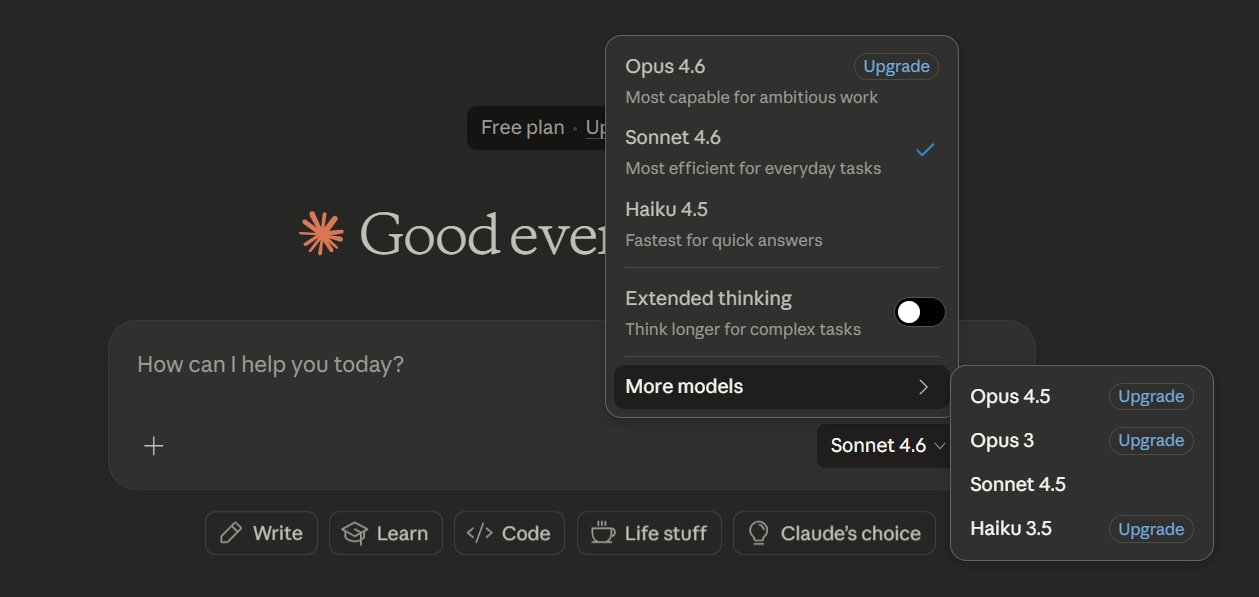
Anthropic positions Claude as a more thoughtful alternative to ChatGPT. The free tier on claude.ai is primarily distinguished by its context window of 200,000 tokens—a capacity consistent across all plans, including the free one. In practice, this allows users to upload documents spanning dozens of pages and process them entirely within a single conversation, eliminating the need for segmentation or loss of context.
The selection of models available on the free plan is broader than it may initially appear. By default, the system runs Sonnet 4.6—the primary workhorse described by Anthropic as "most efficient for everyday tasks." However, the dropdown menu also provides access to Haiku 4.5 (optimized for rapid responses to simple queries) and Sonnet 4.5 under the "More models" section. An "Extended thinking" toggle enables a mode where the model dedicates additional processing time to complex problems. The entire Opus family (versions 4.6, 4.5, and 3)—the most powerful models designed for ambitious tasks—is marked with an "Upgrade" badge and remains exclusive to paid plans. At the bottom of the interface, quick-action buttons labeled Write, Learn, Code, Life stuff, and Claude's Choice facilitate conversation initiation.
Beyond model selection, the free tier includes web search, code and document processing, and artifact generation (rendering HTML components, tables, and visualizations directly within the chat). It also supports project-based workflow organization, integration with Slack and Google Workspace services, and external tool connectivity via connectors (remote MCP). However, memory retention across conversations is unavailable; this feature is reserved for the paid Pro plan, priced at $17 USD per month with annual billing or $20 USD monthly.
The primary drawback of the free version is the lack of transparency regarding usage limits. Claude does not disclose remaining request quotas in advance. Instead, it eventually notifies users that they must wait until a specific time (which varies) or upgrade their subscription. These limits are contingent on the selected model and conversation length; switching to Haiku can extend the available free quota if Sonnet has already reached its ceiling.
Google Gemini: Power Through Ecosystem Integration
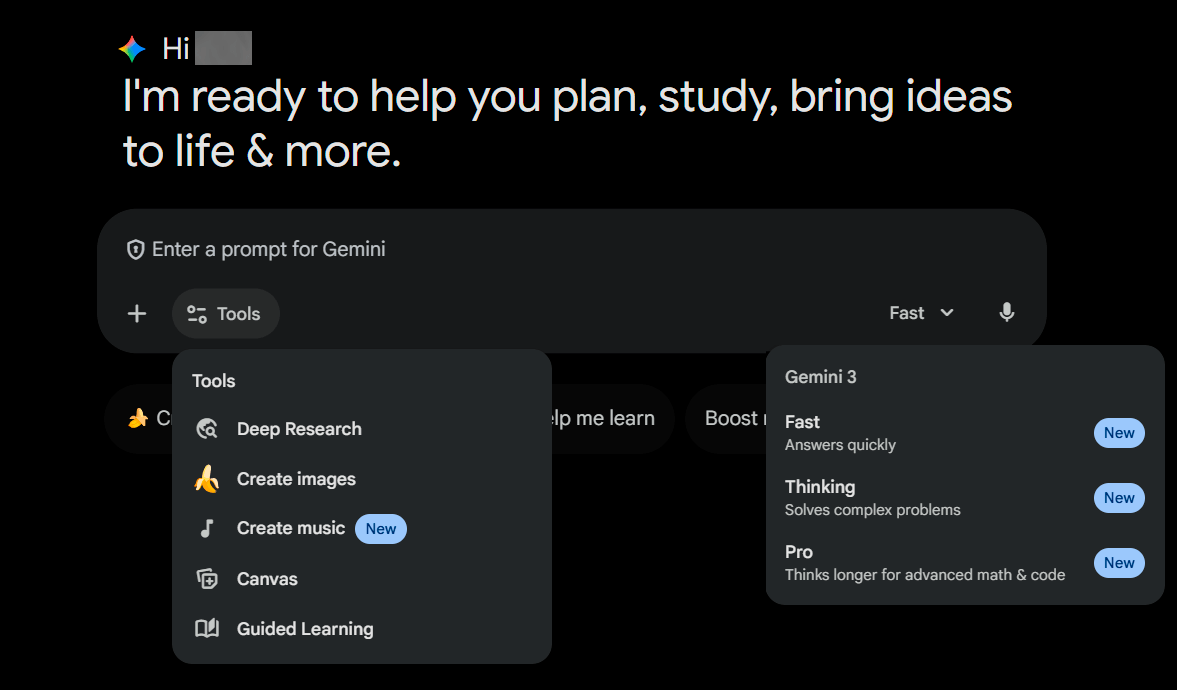
Gemini's primary advantage lies not in the model itself, but in its ecosystem. The free tier provides access to the Gemini 3 Flash model, limited access to the more powerful 3 Pro variant, Deep Research capabilities in basic mode, and 50 daily AI credits for video generation via Flow (a video generation platform) and Whisk (an automation service). It also includes access to NotebookLM, Google's document-centric tool. Storage is capped at the standard 15 GB shared across the entire Google account.
However, the true differentiator is Gemini's deep integration into Gmail, Google Docs, and other daily-use Google services. Users can rewrite emails directly within Gmail or summarize documents right inside Google Docs. This fundamentally streamlines workflows for anyone operating within the Google ecosystem. Note that direct in-app access to Gemini is now a feature of the paid Google AI Plus subscription, priced at €7.99 per month.
Perplexity AI: When you need an answer, not a conversation
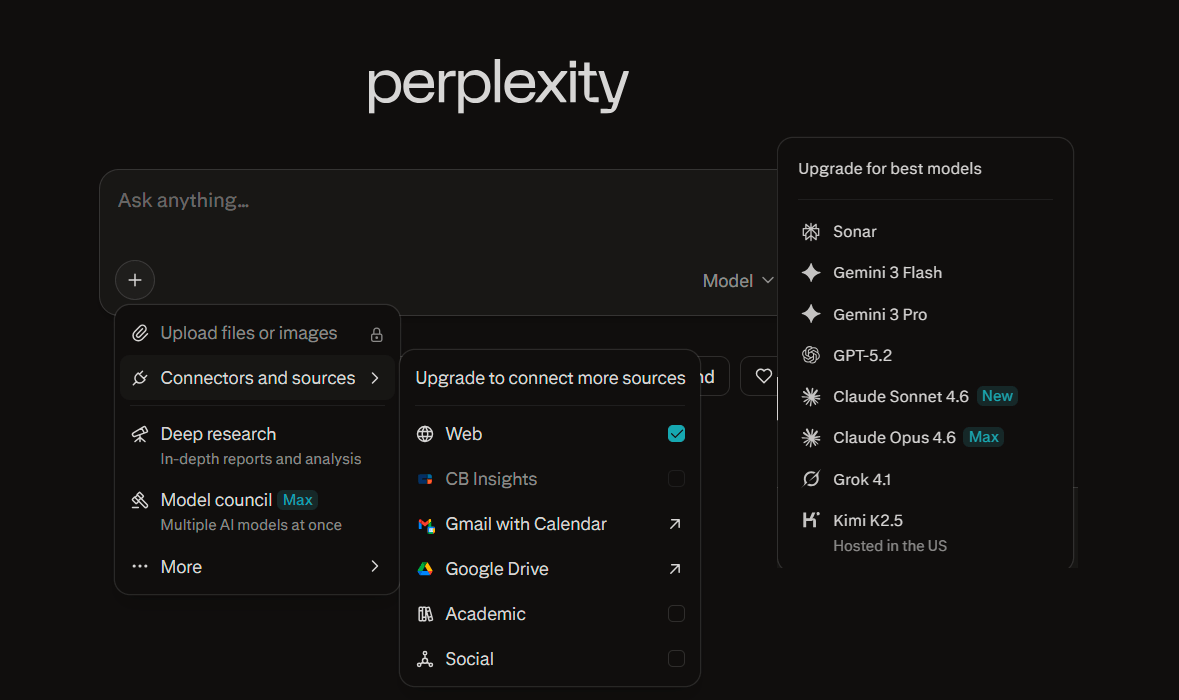
Perplexity functions more as a next-generation search engine than a traditional chatbot. Its defining feature is that every response includes citations, allowing users to verify the origin of any information. This fundamentally shifts its use case: Perplexity excels in scenarios demanding factual accuracy rather than text generation from scratch.
The interface of the free tier is impressive. The model selection dropdown features Sonar (Perplexity's proprietary model), Gemini 3 Flash, Gemini 3 Pro, GPT-5.2, Claude Sonnet 4.6, Claude Opus 4.6, Grok 4.1, and Kimi K2.5. This offers broader access than any competitor, effectively providing a single-window gateway to models from all major AI laboratories. However, a banner at the top honestly advises users to "Upgrade for best models," while premium options like Claude Opus 4.6 are marked with a "Max" badge. The free plan includes web search as the primary source, Deep Research for comprehensive reports, and a Connectors and sources section supporting Gmail, Google Drive, Academic, and Social integrations—though most connectors require an upgrade. File and image uploads are also locked behind a paywall.
Perplexity does not publicly disclose specific details of its free tier, such as the exact number of daily requests allowed. Based on available information: basic search is unrestricted for all users, while advanced Pro queries featuring deeper reasoning and Model Council (simultaneous querying of multiple models) are paid features. The Pro plan costs $20 USD per month or $200 USD annually, providing up to 200 advanced queries per week, up to 20 Deep Research reports per month, and 50 file uploads per week.
Microsoft Copilot: A Familiar Environment
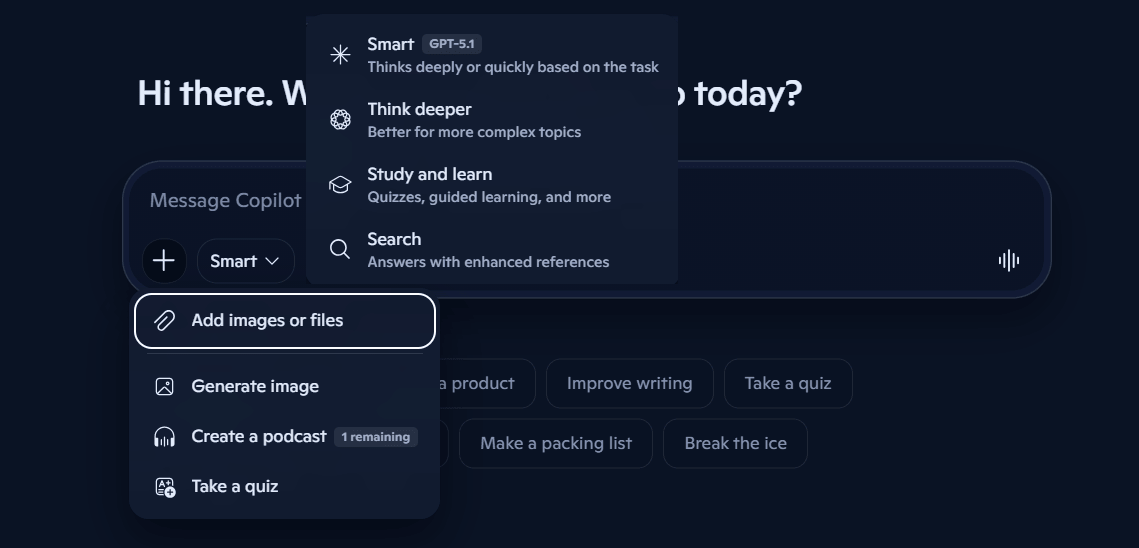
Microsoft is betting on the fact that users are already entrenched in its ecosystem. The free version of Copilot is accessible via web browsers, mobile apps, and is natively integrated into Windows. Notably, the underlying model has been significantly upgraded: it now runs on GPT-5.1 under the hood, replacing the GPT-4 architecture used just recently.
The free interface offers four operational modes: Smart (the default "intelligent" mode powered by GPT-5.1, which dynamically adjusts reasoning depth and speed based on task complexity), Think Deeper for tackling complex subjects, Study & Learn featuring quizzes and educational scenarios, and Search, which provides enhanced source citations. Additional tools include image generation, file and image upload for analysis, and even podcast creation. However, the free tier imposes significant limits; as shown in the screenshot, only "1 remaining" credit is available, severely restricting heavy usage.
The primary limitation remains unchanged: integration with Word, Excel, PowerPoint, and OneNote requires a Copilot Pro subscription at approximately $20 USD per month. Access to Teams is exclusively available via Copilot for Microsoft 365 at roughly $30 USD per month, which is offered only as an add-on to existing Microsoft 365 business subscriptions. While the free browser-based Copilot functions quite well, limitations arise immediately when attempting to edit documents directly within Office applications.
Comparison of Free AI Chat Plans
|
Feature |
ChatGPT |
Claude |
Gemini |
Perplexity |
Copilot |
|---|---|---|---|---|---|
|
Model |
GPT-5.2 (limited) |
Sonnet (limited) |
Gemini 3 Flash |
Sonar |
GPT-5.1 + Bing |
|
Context Window |
16K tokens |
200K tokens |
Undisclosed |
Undisclosed |
Undisclosed |
|
Web Search |
Yes |
Yes |
Yes |
Yes |
Yes (Bing) |
|
Image Generation |
Yes (limited) |
No |
Yes (50 images/day) |
No |
Yes (Designer) |
|
File Uploads |
Limited |
Yes |
Yes |
Limited |
Yes |
|
Memory |
Limited |
No |
No |
No |
No |
|
Training on Data |
Can be disabled |
Can be disabled |
Can be disabled |
Can be disabled |
Undisclosed |
|
Office Apps |
No |
No |
Gmail, Docs (paid) |
No |
Limited |
Free versions are not merely stripped-down products for non-paying users; they are fully functional tools with practical ceilings that are irrelevant for many use cases. We recommend testing several options to identify which limits specifically hinder your workflow before deciding whether a paid subscription is worthwhile.
Free AI-Powered Image Generators
Text-based assistants represent one category, while image generators constitute a distinct and rapidly evolving niche. The landscape for free access differs significantly here: most tools operate on a credit-based system, where credits inevitably deplete over time. As recently as 2023, generating images with artificial intelligence (AI) required either payment or navigating the complexities of locally installing Stable Diffusion—a process demanding video memory (VRAM) of at least 8 GB. Today, free access to image generation has become the standard.
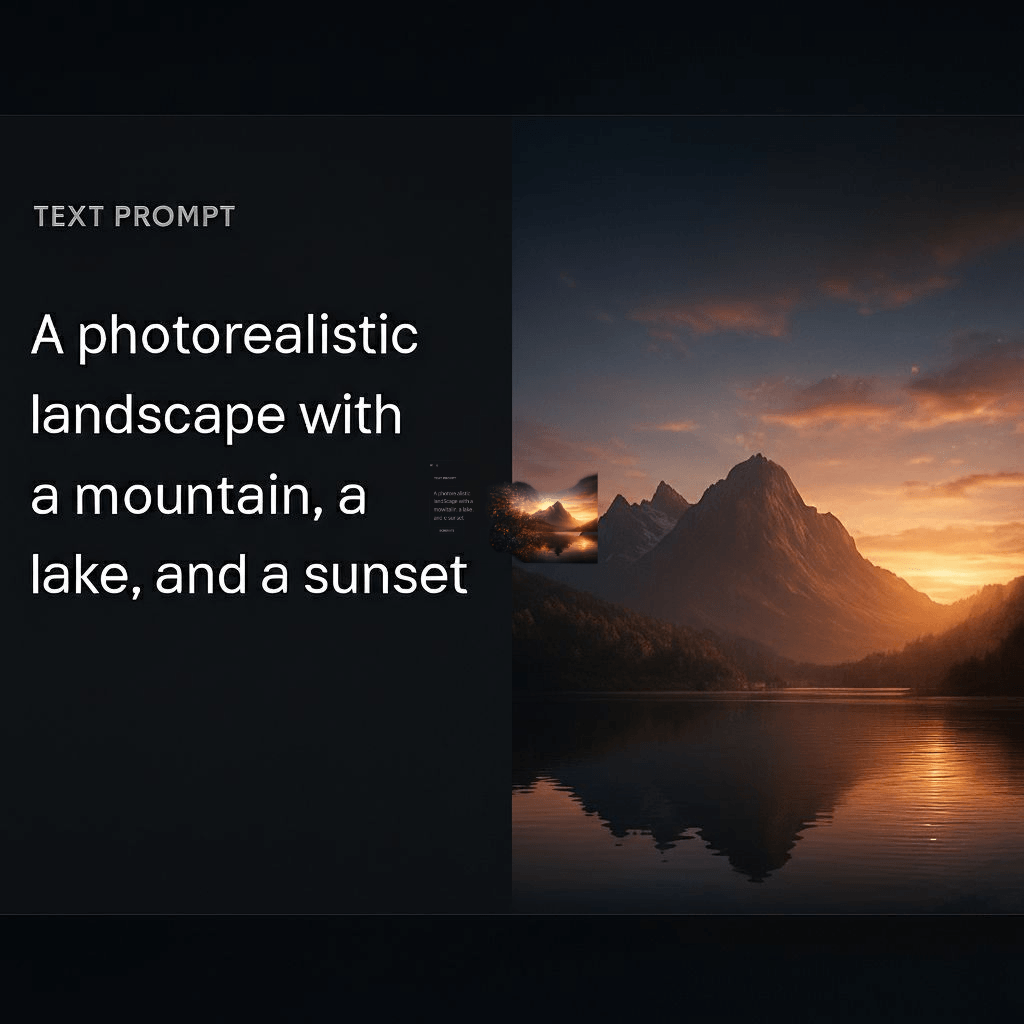
To illustrate performance differences, we submitted an identical, sufficiently detailed text prompt to each free generator to highlight variations in quality, style, and interpretation. Midjourney was excluded from this evaluation due to the absence of a free tier and no available platform for testing. The prompt used is as follows:
The results appear below each service description. The prompt was intentionally comprehensive—specifying precise composition, lighting style, and transition details. This level of specificity is essential when usage limits are tight and every generation counts. For comparison, in our section on prompt engineering best practices, we demonstrate Bing Image Creator's output for the vague query "beautiful picture made by AI." Selecting this service is logical: it offers the most generous free tier, making it the primary destination for beginners who have not yet optimized their prompts.
DALL·E 3 (via ChatGPT)
DALL·E 3 (integrated within ChatGPT) enables image generation through conversational interaction. Users describe scenes in natural language; the model then refines details and iteratively enhances the output based on dialogue.
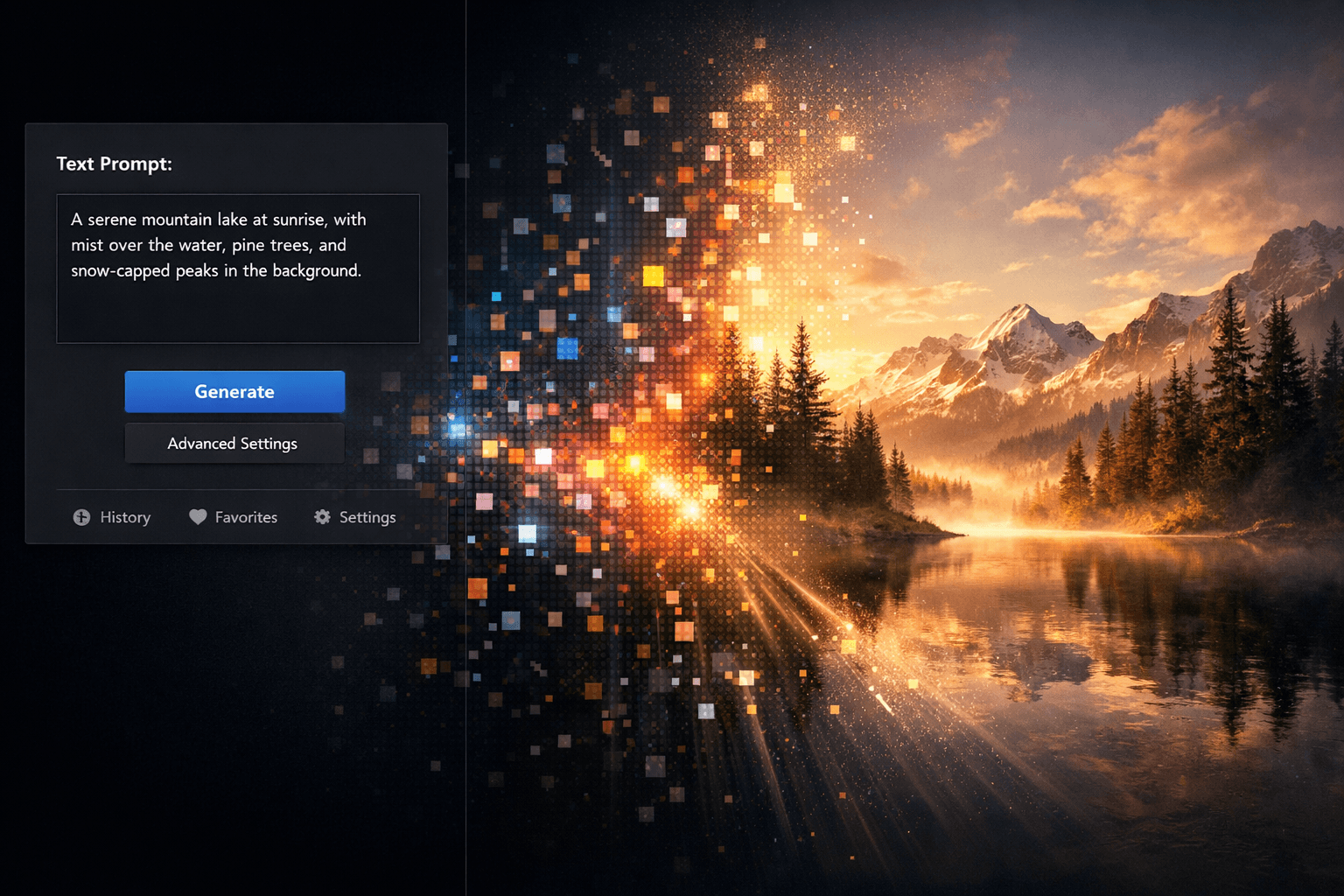
The Free tier (at €0/month) allows users to experiment with image generation, engage in brief conversations, and gain a general overview of artificial intelligence capabilities. While exact limits are not publicly specified, practical experience indicates a daily allowance of 3–5 generated images.
Bing Image Creator by Microsoft
Bing Image Creator is one of the most accessible tools for image generation. Microsoft offers a choice among three models: its proprietary MAI-Image-1 (specializing in photorealism, lighting, and landscapes), DALL-E 3, and GPT-4o. A key distinction is that GPT-4o is the only model capable of generating images containing text.
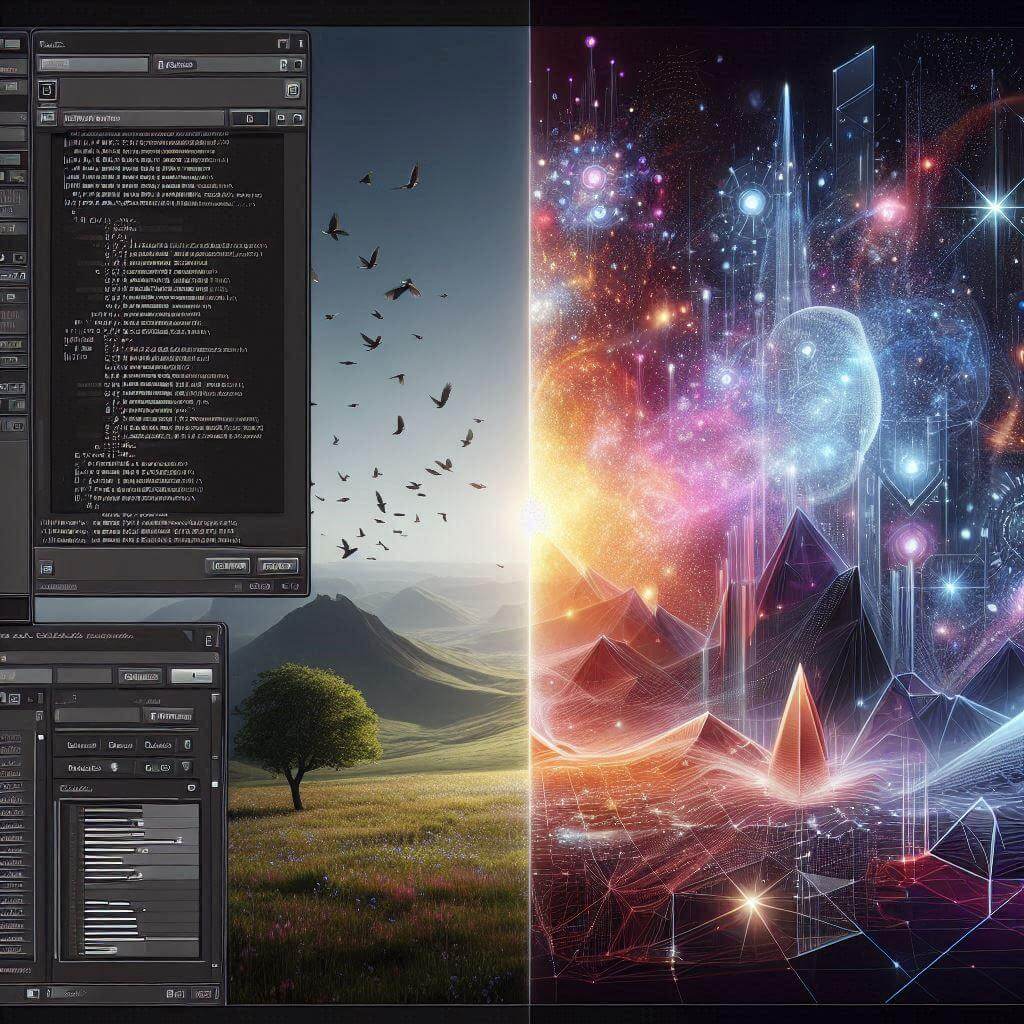
The free tier includes 15 fast generations per day with accelerated processing. Once this limit is reached, the service automatically switches to standard speed—slower but without additional restrictions. Users can make up to 200 requests within a 24-hour period. Generated images are retained for 90 days and include a watermark on each file. Additional fast generations can be earned via Microsoft Rewards; there is no separate paid subscription required. Commercial use is permitted, though the service is unavailable in certain regions.
A distinctive feature is the ability to animate existing images, transforming them into short video clips.
Leonardo.ai
Leonardo.ai is a platform designed for professional creators, offering a robust suite of tools. The free plan provides 150 Fast Tokens daily (Fast Tokens represent the service's internal currency). Depending on resolution and model selection, this allowance supports dozens of image generations per day. Under the free tier, all generations are public; private generation capabilities are reserved for paid plans. Additionally, basic quality settings are limited, only one personal collection is available, and users cannot hide their work from others.
Paid plans begin with Essential ($12/month), which includes 8,500 fast tokens per month, private generations, enhanced quality, unlimited personal collections, up to 10 personal AI models, and 2 concurrent generation sessions. The Premium tier ($30/month) offers 25,000 fast tokens per month, up to 20 personal AI models, 3 concurrent generation sessions, a job queue supporting up to 10 tasks, and unlimited image generation in economy mode for select models. The Ultimate plan ($60/month) provides 60,000 fast tokens per month, up to 50 personal AI models, 6 concurrent generation sessions, a queue capacity of up to 20 tasks, and unlimited image and video generation in economy mode for specific models. Please note that unlimited access applies exclusively to economy-mode generation for selected models; standard generation continues to consume fast tokens.
Stable Diffusion Online
Stable Diffusion Online is a web-based interface for running Stable Diffusion without local installation. The free plan provides 10 credits daily, enables the simultaneous generation of two images, and operates ad-free. It also includes an image upscaling feature.
The primary limitation of the free tier is the lack of access to advanced image and video generation models, the absence of a commercial license, and the public visibility of all generations. Paid plans include: Pro ($10/month with annual billing) offering 2,000 monthly credits, four concurrent generations, a commercial license, and private generation; Max ($20/month with annual billing) providing 5,000 credits under the same terms.
Playground AI
The free plan allows up to 10 image generations every three hours and includes three monthly edits using advanced models (GPT-4o, Nano Banana, Seedream). The license is restricted to personal use only, and generation speed may be reduced during peak hours.
Paid Plans: Pro ($12/month billed annually, $15/month billed monthly) includes up to 75 images every 3 hours, 150 advanced model edits per month, a commercial license, and enhanced editing capabilities. Pro Plus ($36/month billed annually, $45/month billed monthly) offers unlimited generation, 1,000 edits per month, priority support, and API (Application Programming Interface) access.
Midjourney
Midjourney is a legendary service that long served as the synonym for high-quality AI image generation. However, by 2026, it no longer offers a full-featured free plan; the trial period has been discontinued. Free trials are unavailable via midjourney.com or Discord. The only option is a limited trial through the Niji Journey app on iOS (Apple's operating system) and Android (Google's operating system), though this is not available on all mobile devices.
The entry-level plan is Basic ($10/month, $8/month billed annually), providing 3.3 hours of Fast GPU time per month (~200 minutes). It does not include the Relax mode (unlimited generation). Higher-tier plans unlock Relax mode and privacy features. Standard ($30/month) offers 15 hours of Fast GPU time and unlimited images in Relax mode. Pro ($60/month) adds Stealth mode for private generations. Mega ($120/month) provides 60 hours of Fast GPU time. Annual subscriptions include a 20% discount. Commercial use is permitted on all plans; however, companies with annual revenue exceeding $1 million must subscribe to either Pro or Mega.
Comparison: Image Generation
|
Service |
Free Tier |
Daily Limit |
Watermark |
Commercial License |
Paid Starting From |
|---|---|---|---|---|---|
|
Bing Image Creator |
+ |
15 fast + 200 standard |
+ |
+ |
Microsoft Rewards Points |
|
Leonardo.ai |
+ |
150 compute units/day |
- |
- |
$10/month (annual) |
|
Stable Diffusion |
+ |
10 credits |
- |
- |
$10/month (annual) |
|
Playground AI |
+ |
10 images/3 hours + 3 edits/month |
- |
No (personal use only) |
$12/month (annual) |
|
Midjourney |
- |
- |
- |
✓ (paid only) |
$8/month (annual) |
The primary distinction between image generators and text assistants lies in their credit-based billing systems, which make usage limits far more tangible. For serious work, 20 monthly credits on Playground AI or 10 daily credits on Stable Diffusion deplete rapidly. Bing Image Creator offers the most generous free tier but includes watermarks. Users seeking watermark-free images for free should consider Stable Diffusion, subject to its 10-credit daily limit. DALL-E 3 is not offered as a standalone product; it is accessible within Bing Image Creator at no cost.
Free AI Video Generators
Video generation remains one of the most resource-intensive tasks for artificial intelligence. The landscape is more complex than image generation: due to high computational costs, most services either offer no free access or provide only token limits. However, progress is evident—by 2026, generating short videos for free has become a reality, albeit with constraints.
Bing Video Creator
Bing Video Creator is a free tool from Microsoft for generating short video clips, integrated into the Bing mobile app and powered by OpenAI's Sora technology. It operates in two modes: Standard (free, unlimited generations but slower processing) and Fast (requires Microsoft Rewards points; free credits may be granted at Microsoft's discretion). Videos are up to 8 seconds long, formatted in 9:16 (vertical), and stored for 90 days. The service is available on iOS and Android, with a desktop version currently in development.
Bing Video Creator does not offer paid subscriptions; additional fast generations are purchased using Microsoft Rewards points (100 points per generation). Points are earned free of charge through Bing app searches and purchases on the Microsoft Store.
Pika Labs
Pika is an AI-powered platform for generating video and images, focused on rapidly creating visual content from text and image inputs. Its primary emphasis is on creative clip generation, advertising scenes, and visual effects rather than corporate avatars or educational formats.
Free access serves as the baseline for using the service, providing a limited number of credits for video and image generation. It enables creating clips based on text or visual prompts, utilizing templates and effects, and testing generation models without payment. The free tier is suitable for experimentation, prototyping, and producing short creative scenes, though output volume is constrained by its credit system.
The Lite plan costs $10 USD per month (billed annually) and includes 200 monthly credits, equating to approximately 40 videos or 100 images. Features include text-to-video and image-to-video generation, 720p output resolution, a library of over 100 templates and effects, character consistency across scenes, and fast generation mode. Content creation is private, watermark-free, and licensed for commercial use.
The Pro plan costs $25 USD per month (billed annually) and includes 600 monthly credits, supporting up to 120 videos or 300 images. This tier adds 1080p output resolution while retaining all Lite features, including templates, character consistency, and accelerated generation.
The Premium plan costs $119 USD per month (billed annually) and includes 3,000 monthly credits, allowing for up to 600 videos or 1,500 images. This tier offers all Pro features plus priority support and full commercial licensing for professional use.
Runway
Runway is a leading platform for professional AI video generation. The service offers proprietary models: Gen-4 Turbo, Gen-4, Gen-4.5, as well as Google's Veo 3.1. Additionally, it provides Act-Two (motion capture) and Aleph (video editing).
The Free plan grants a one-time allocation of 125 credits, which do not replenish. This is sufficient for approximately 25 seconds of video in Gen-4 Turbo mode. The most powerful model, Gen-4 Video, is unavailable on the free tier. Videos include a watermark. Essentially, the 125 free credits serve as a demo rather than a tool for daily production.
Paid plans: Standard ($15 USD/month): 625 monthly credits, access to all models including Gen-4.5 and Veo 3.1, and no watermark; Pro ($35 USD/month): 2,250 credits and custom voice creation capabilities; Unlimited ($95 USD/month): 2,250 credits plus unlimited generations in Explore mode (research/relaxed speed).
Synthesia
Synthesia is a specialized platform for creating educational and corporate videos featuring AI avatars. Its focus lies not on generating video from text prompts alone, but on producing structured clips with speaking avatars.
The Basic free plan includes 1,200 monthly credits, equivalent to approximately 10 minutes of video. Videos are intended for viewing only; download functionality is not provided. This is a permanent free tier requiring no credit card binding.
The Starter paid plan costs $14 USD per month (billed annually) and includes up to 120 minutes of video or AI dubbing per year. Features include video downloads, an AI Video Assistant, AI Dubbing, removal of the Synthesia logo, access to a library of 125+ AI avatars, and collaboration capabilities for one editor and three guest users.
The Creator plan costs $49 USD per month (billed annually) and includes up to 360 minutes of video or AI dubbing per year. It adds five custom avatars, branded video pages, API access, interactive videos, an expanded library of 180+ AI avatars, and team collaboration for one editor and five guests.
The Enterprise plan offers unlimited video minutes, access to 240+ AI avatars, and unlimited custom avatars. It also includes translation into 80+ languages, SAML (Secure Access Markup Language) and SSO (Single Sign-On) protocols, team collaboration tools, and SCORM (Sharable Content Object Reference Model) export for learning content.
D-ID
D-ID specializes in creating videos with speaking avatars and embedded AI agents. It supports voice cloning, emotional avatars, and video translation into over 30 languages with lip-sync synchronization. Unlike Synthesia, D-ID's primary focus is on interactive dialogue characters.
Free access is provided via a 14-day trial period with a limit of 3 minutes of video for agents, translation, and API usage. The trial includes access to over 100 stock AI avatars, video and photo avatars, one custom avatar, standard voices, and API access. Videos feature a full-screen watermark, the license is restricted to personal use only, and processing occurs in standard mode.
The Lite plan costs $4.70 USD per month (billed annually) and includes unlimited video generation for the first month, followed by up to 10 minutes of video per month. This tier supports photo avatars only, retains the D-ID watermark, adds one embedded agent, and utilizes accelerated video processing.
The Pro plan costs $16 USD per month (billed annually) and includes unlimited video generation for the first month, followed by up to 15 minutes of video per month. Features include video and photo avatars, three custom avatars, premium voices, one voice clone, an AI watermark, a commercial license, one embedded agent, and accelerated processing.
The Advanced plan costs $108 USD per month (billed annually) and includes unlimited video generation for the first month, followed by up to 100 minutes of video per month. This tier offers video and photo avatars, five custom avatars, three voice clones, three embedded agents, the ability to use a custom logo, and faster processing speeds.
The Enterprise plan provides unlimited video minutes, custom limits for campaigns, agents, and API usage. It includes all Advanced features, an expanded number of custom and studio avatars, professional voice cloning, integration support, parallel video processing, and enterprise-grade security.
Comparison: Video Generation
|
Service |
Free Tier |
Free Tier Limits |
Resolution |
Watermark |
Paid Plans Starting At |
|---|---|---|---|---|---|
|
Bing Video Creator |
+ |
Unlimited Standard (slow); Fast mode via reward points |
Up to 8s, 9:16 aspect ratio |
– |
No subscription required (Fast mode costs 100 reward points) |
|
Pika |
+ |
Limited credits |
Up to 720p (base version) |
No (on paid plans) |
$10/month |
|
Runway |
+ |
125 one-time credits |
– |
+ (free tier) |
$15/month |
|
Synthesia |
+ |
10 mins/month |
1080p |
+ (base version) |
$14/month |
|
D-ID |
+ (14-day trial) |
3 mins (trial period) |
– |
Full-screen watermark |
$4.70/month |
Free Tier Limitations: What to Expect
Regardless of the service you choose, a free plan always involves trade-offs. While specific restrictions vary, they generally follow several recurring patterns:
Request Volume Limits — This is the most ubiquitous constraint. For text assistants, limits are typically daily and opaque: ChatGPT downgrades to a weaker model, while Claude prompts users to wait. Image and video generators employ a more predictable credit-based system, though caps remain strict: 10 credits/day for Stable Diffusion, 10 images every 3 hours for Playground (with throttling during peak hours), or unlimited standard mode for Bing Video Creator. Runway offers a one-time allocation of 125 credits and nothing more.
Generation Quality — This is the second critical factor. The free tier of ChatGPT is limited to a 16,000-token context window, making large documents unprocessable. Upon exhausting daily limits, ChatGPT switches to a less capable model, whereas Claude becomes temporarily unavailable, suggesting users wait until the next day or subscribe. In video generation, free tiers often cap resolution: 720p for Bing Video Creator and standard resolution for Leonardo.ai. Video duration is also restricted, typically to 5 seconds on free plans.
Processing Speed — Free users are prioritized last. Bing Image Creator switches to standard speed once fast generations are exhausted. For Runway, Leonardo.ai, and Midjourney, "relaxed" or slow-generation modes are often exclusive to paid subscribers.
Watermarks — These appear on the free tiers of Bing Image Creator, Playground AI, Runway, and Synthesia. D-ID goes further, displaying a full-screen watermark during its trial period.
Privacy and Rights — On free plans for Leonardo.ai and Stable Diffusion Online, all generations are public. Commercial use is prohibited on Leonardo.ai's free tier. For ChatGPT and Claude, user data may be utilized for model training unless explicitly disabled in the settings.
Maximizing the Value of Free AI Services
Leverage different services for distinct use cases. Use Bing Image Creator for rapid photorealistic generations with a commercial license. Choose Leonardo.ai for professional workflows involving fine-tuning custom models. Opt for Stable Diffusion Online when you need access to SD without local installation. Utilize Playground AI for experimental image generation. Deploy Claude for processing large documents (200K token context window). Rely on Perplexity for fact-checking with cited sources.
Monitor limit reset cycles. Bing Image Creator quotas refresh daily; Leonardo.ai tokens are also replenished daily. Playground AI resets its generation quota every 3 hours, while its advanced model quota resets monthly. Schedule compute-intensive tasks at the beginning of each reset period.
Master prompt engineering. Detailed prompts (e.g., "oil painting by Caravaggio, 1599, candlelight, dramatic chiaroscuro") yield significantly superior results compared to generic ones (e.g., "painting"). This is critical when operating under strict limits, as every attempt counts. Above, we presented images generated using detailed prompts; below is an example of how the output would appear without such specific instructions:

If privacy or a commercial license is required, review the service terms. On Leonardo.ai's free tier, all outputs are public and lack a commercial license. Bing Image Creator permits commercial use but applies a watermark. Stable Diffusion Online also excludes commercial usage on its free plan.
Lower your expectations for video generation. Free tiers typically offer 5–20 generations per month at 480p resolution with a 5-second duration. This is demo mode, not a production-ready tool. For professional video output, a paid subscription is inevitable. The sole exception is Synthesia, which provides 10 minutes of generation monthly on its free plan; however, this is a specialized format focused on avatars and corporate training.
An obvious workaround is registering multiple accounts for the same service, which formally multiplies free limits. Two Leonardo.ai accounts yield 300 daily tokens instead of 150; three Stable Diffusion accounts provide 30 credits. In practice, many users adopt this strategy, especially when limits are exhausted mid-day. However, be aware that creating multiple accounts is explicitly prohibited by the Terms of Service for virtually all listed services. This applies to ChatGPT, Claude, Leonardo.ai, and Runway; their user agreements clearly state "one account per user." Consequences range from banning all associated accounts to a permanent ban with data loss. Services detect duplicates via IP address, device fingerprinting, payment details, and other parameters, improving detection capabilities annually. The decision whether to risk it for an extra ten credits is yours, but you have been warned.
Seek promo codes and referral programs. Many AI services regularly distribute bonus credits via promo codes published on official Telegram channels, Discord servers, and social media pages. Leonardo.ai periodically awards additional tokens for inviting friends, while Runway and Pika offer bonuses to new users via referral links. Subscribe to the service's newsletter upon registration; welcome emails often contain promo codes for extended trial periods. Before purchasing a subscription, always check aggregators like Coupert or simply use Google Search.
Summary Table: All Tools
|
Service |
Category |
Free Limit |
Watermark |
Commercial Use |
Paid From |
|---|---|---|---|---|---|
|
ChatGPT |
Chat / Images |
GPT-5.2, DALL·E 3 (daily limit) |
— |
— |
€8/month (Go) |
|
Claude |
Chat |
Sonnet (daily limit) |
— |
— |
$17 USD/month (annual billing) |
|
Gemini |
Chat |
Gemini 3 Flash |
— |
— |
€7.99/month |
|
Perplexity |
Chat / Search |
Basic search |
— |
— |
$20 USD/month |
|
Copilot |
Chat |
GPT-5.1 + Bing |
— |
— |
~$20 USD/month |
|
Bing Image Creator |
Images |
15 fast + 200 per day |
+ |
+ |
Loyalty program points |
|
Leonardo.ai |
Images + Video |
150 compute units/day |
— |
— |
$10 USD/month (annual billing) |
|
Stable Diffusion |
Images |
10 credits/day |
+ |
— |
$10 USD/month (annual billing) |
|
Playground AI |
Images |
10 images/3h + 3 edits/month |
— |
No (personal use only) |
$12 USD/month (annual billing) |
|
Midjourney |
Images + Video |
No free plan |
— |
+ (paid) |
$8 USD/month (annual billing) |
|
Bing Video Creator |
Video |
Unlimited standard + fast via loyalty points |
— |
+ |
No subscription |
|
Pika Labs |
Video |
~150 credits/month |
+ |
— |
$10 USD/month |
|
Runway |
Video |
125 credits (one-time) |
+ |
— |
$15 USD/month |
|
Synthesia |
Video (Avatars) |
10 minutes/month |
+ |
— |
$14 USD/month |
|
D-ID |
Video (Avatars) |
3 minutes (14-day trial) |
+ |
— |
$4.70 USD/month |
FAQ
Which free AI chatbot is the best?
It depends on your use case. For processing large documents, choose Claude (200K token context window). For integration with Google services, Gemini is optimal. For fact-checking with cited sources, Perplexity excels. For generating images directly within the chat interface, consider ChatGPT or Copilot. There is no universal "best" option; test several and select the one whose limitations impact your workflow the least.
Can I generate images for free in Midjourney?
No. As of 2026, Midjourney does not offer a free tier. The trial period has been discontinued. Free access is unavailable via midjourney.com or Discord. The minimum subscription is the Basic plan at $10/month ($8/month with annual billing).
Are there any completely free AI video services?
No service is entirely free, but several offer functional free tiers with limitations. Synthesia provides 10 minutes of monthly generation (avatars only; downloads are disabled). Bing Video Creator offers unlimited standard generations (720p, up to 8 seconds, no watermark). Runway grants a one-time allocation of 125 credits (~25 seconds of video), which do not replenish. For serious video production, a paid subscription is inevitable.
Can I use AI-generated images for commercial purposes at no cost?
This depends on the provider. Bing Image Creator permits commercial use even on its free tier. Leonardo.ai and Stable Diffusion Online do not allow this on free plans. Playground AI's terms are not publicly specified. Midjourney allows commercial usage on all plans, but it lacks a free tier. Always review the specific service's Terms of Use.
Do AI services use my data for training?
ChatGPT and Claude may use data from free-tier users for training, though this can typically be disabled in settings. Gemini operates similarly. Perplexity offers limited opt-out capabilities. Microsoft Copilot has not disclosed its data usage policies. Most providers do not use customer data for training by default on paid business plans.
Conclusion
In 2026, free AI tools are not merely restricted demo versions for budget-conscious users; they are functional instruments with clearly defined capability boundaries. ChatGPT provides access to GPT-5.2 with daily limits. Claude offers a 200K token context window. Gemini enables deep integration with Google services. Bing Image Creator supports up to 200 image generations per day with commercial licensing. Synthesia delivers 10 minutes of monthly video generation featuring digital avatars.
Limitations exist and are noticeable: credits deplete, models may downgrade to less capable versions, watermarks can degrade output quality, and privacy on free tiers is often the exception rather than the rule. However, for most tasks—testing a tool, completing a one-off project, or automating routine workflows—free tiers are sufficient.
The primary recommendation is to avoid relying on a single service. Leverage each tool for its specific strengths: Claude for long-form documents, Perplexity for source-backed research, Bing Image Creator for rapid image generation, and Synthesia for educational videos. A combination of free tiers across multiple services often meets requirements as effectively as a single paid subscription.