



 +31 20 820 3777
 Compliance
  Support
  Documentation
 Login
Login 


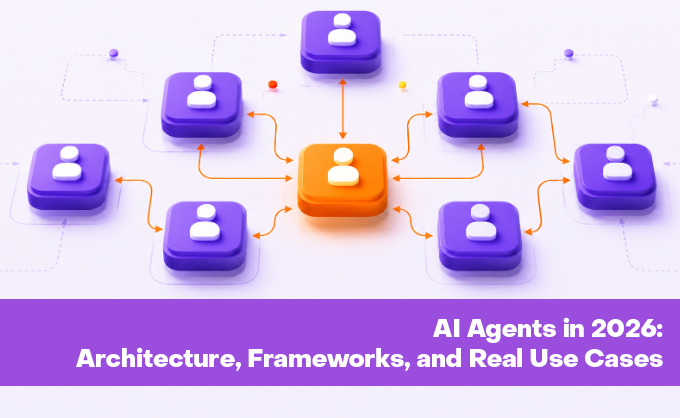


Everyone is talking about agents lately. It’s a buzzword everywhere—every second article on artificial intelligence features an "autonomous assistant" that is supposedly about to replace half of all professions, and every product launch seems to include the "agentic" prefix. Despite this hype, little attention is paid to what an agent actually is and how it differs from the chatbots we have already grown accustomed to.
Below, we will break down what an agent is made of and why, without step limits, it can burn through your budget overnight.
AI Platforms: GPU Servers with Pre-installed AI & LLM Software
Rent NVIDIA professional or gaming GPUs for your AI project. Pre-installed software is ready to go immediately after server deployment.
The Evolution from Chatbots to Agents
A chatbot responds to a prompt and then goes silent, waiting for your next input. An agent works differently: it receives a goal, breaks it down into subtasks itself, calls tools, and repeats the cycle until it achieves the result—without asking you for permission at every step. The difference might seem subtle, but it is why agents often become expensive and unpredictable. One "run" does not equal one model call; each extra loop costs money and can sometimes lead to an infinite loop. Monitoring an agent requires much closer supervision than monitoring a chatbot. Despite this complexity, their popularity continues to surge. To put it simply, the evolution of agents has followed this path:
It started with scripted bots built on rigid rule trees that broke at the slightest deviation in phrasing. Large Language Models (LLMs) removed that fragility, but early models like GPT-2 could only continue text and had no conversational memory. Then layers were added one by one. Models were taught to maintain conversation history, retrieve fresh or private data from external databases (a technique called Retrieval-Augmented Generation, or RAG, which Meta described back in 2020), reason through steps out loud, and finally, call tools. The final piece was closing the loop—creating a system where the model decides if another step is needed. In 2023, this concept manifested as the wave of autonomous agents like AutoGPT and BabyAGI, followed by multi-agent systems with specialized roles. The latest layer consists of communication standards: Anthropic's MCP in late 2024 and Google's A2A in the spring of 2025.
Because of this layered history, the line between a chatbot and an agent is increasingly blurred. Add memory, tool access, and a loop to an advanced chatbot, and it becomes an agent in all but name.
Why Agents Are the Future of AI
One should be cautious with such a bold claim given the noise surrounding agents. However, the technology has indeed evolved rapidly over the last few years. Models are becoming more reliable at tool calling, industry standards for connectivity have emerged, and frameworks are reaching stable versions.
The direction of the industry is best indicated by enterprise investment. Major players are moving away from flashy demos where an agent "magically" solves a task, focusing instead on practical reliability: ensuring an agent doesn't lose its place after a crash, guaranteeing reproducible results upon restart, and requiring human-in-the-loop confirmation for critical actions. Time will tell if the promise of fully autonomous assistants will be fulfilled.
What is an AI Agent: A Simple Definition
Definition
An agent is typically understood as a Large Language Model placed within a control loop and equipped with access to external tools. Here, the model acts as the "reasoning engine," while the loop and tools transform that core from a mere conversationalist into an executor. A typical agent consists of three components, though this composition varies. Without a control loop, you just have a one-off response; without tool access, the model cannot affect the external world. Memory is not strictly required—some agents lack long-term memory, some use only a single tool, and others operate without a dedicated planner.
Difference from Standard Chatbots
A chatbot responds to a single prompt, and its work ends with that response. An agent, given a single goal, performs multiple model calls, interacting with the external world and adjusting its plan based on results. The quality of an agent depends less on the raw power of the LLM and more on the quality of its "wrapper"—how the loop is structured, how tools are described, and how errors are handled. A powerful model wrapped in a poorly designed system will lose to a mid-tier model with a robust architecture.
Key Characteristics
A functional agent typically possesses five interconnected properties:
- Autonomy: The agent decides the next step rather than waiting for a command for every single action.
- Goal-Orientedness: It receives a goal in natural language, not a predefined step-by-step recipe. Breaking down tasks is the agent's responsibility.
- Tool Use: Searching, calling external APIs, running code, or reading files. Tools allow the agent to access data and capabilities outside the model’s internal weights.
- Memory and Context: Short-term memory maintains the current task flow; long-term memory preserves facts across different sessions.
- Iterativity: A "Reasoning > Action > Observation" loop that repeats until the goal is met or a stop condition is triggered.

Five agent properties within the reasoning-action-observation loop
How AI Agents Work
Agent Architecture
Almost every agent relies on the same fundamental stack: an LLM as the decision-making core, an orchestrator (control program) that runs the loop and executes calls, a set of tools with descriptions, and two types of memory. The orchestrator is the critical component; it — not the model — actually executes tool code, injects results back into the context, and monitors stop conditions.
The ReAct Cycle (Reasoning + Acting)
In October 2022, Shunyu Yao et al. from Google Research and Princeton published the ReAct paper, where a model alternates between reasoning and acting. It first formulates a thought about what to do next, then calls a tool, reads the observation, and adjusts its plan. In each iteration, the model receives the accumulated history and the list of available tools, generates the next thought and action, and repeats this until it decides the goal is reached or an external limit is hit.
It is important to note that ReAct is not the only way to organize an agent, and by 2026, it isn't always the primary method. Many production systems are moving away from free-form "reasoning loops" toward structured tool calling and explicit state graphs where transitions are predefined. For instance, LangGraph is inherently a state graph rather than a loose loop. While ReAct remains a vital foundational concept for explaining agents, industry practice increasingly favors predictable orchestration over spontaneous reasoning at every step.
Task Planning
In simple agents, there is no separate planner; planning happens within the same reasoning process used before each action. In more complex systems, planning is decoupled: the agent first outlines a list of subtasks and then follows them. This decoupling has a downside: a plan made at the start becomes obsolete as soon as the agent encounters an unexpected obstacle, requiring it to rewrite the plan on the fly.
Tool Use (Tools)
From the model's perspective, tools are simply function descriptions that it is permitted to call. The model does not execute code itself; it returns a tool name and arguments, which the orchestrator then executes, passing the result back into the context. While some systems have integrated execution environments where this line is blurred, the decision to run code still resides in the control layer. This is the source of many security vulnerabilities: an agent literally decides which "lever" to pull based on text it has read.
Memory (Short-term and Long-term)
Memory is categorized by its lifecycle. Short-term memory is the accumulated history of the current dialogue, typically passed into the model's context in full or as a summary at each step. Summarization and selective retrieval are used to prevent long histories from bloating token usage. Long-term memory persists between sessions and is often implemented via vector databases (storing facts as embeddings for semantic similarity), though relational, graph, and hybrid schemas are also common.
Types of AI Agents
Single-agent
A single agent with a set of tools is easier to debug, cheaper, and more predictable. It keeps the entire context in one place and doesn't waste model calls negotiating with itself. For most "research this topic and summarize it" tasks, this is sufficient.
Multi-agent (Agent Teams)
Multi-agent setups are justified when a task naturally breaks down into roles with different specializations, where the output of one step becomes the input for another. However, flexibility comes at a cost: every agent represents an additional stream of model calls, and inter-agent communication consumes both tokens and time, adding more points of failure or desynchronization. In practice, I have seen teams of four agents being refactored back into a single agent once it became clear that three of the roles weren't actually contributing anything meaningful.
Specialized Agents (Code, Research, Data Analysis)
This is a growing niche: agents tailored for specific classes of tasks. A coding agent can read a repository, run tests, and fix files. A research agent is optimized for searching and verifying sources. An analytical agent writes and executes code on your data. Specialization often provides more value than a general-purpose agent because both the prompt and the toolset are fine-tuned for one specific workflow.
Popular AI Agent Examples
AutoGPT
AutoGPT was released in late March 2023 by Toran Bruce Richards from Significant Gravitas. You give an agent a name, a role, and up to five sub-goals, and it begins working autonomously by breaking the main goal into steps. At the time, its capabilities were mind-blowing: the same loop could write code, search the web, and compile reports without human intervention at every step. It operated as an autonomous loop on top of GPT-4, a concept that also gave rise to the famous "ChaosGPT" experiment and many complaints about agents getting stuck in loops. By 2026, it has evolved from a simple script into a platform with a visual builder where agents are assembled from connected blocks.
BabyAGI
BabyAGI, released by venture investor Yohei Nakajima in March 2023, went viral within a week. Essentially, it is a simple task manager powered by an LLM. Early versions were about 140 lines of code and operated in a loop: take a goal, break it into tasks, execute one, generate new tasks from the result, and re-prioritize. Nakajima archived the original repository in September 2024, leaving it as a learning artifact. By Spring 2024, BabyAGI was cited in dozens of academic papers, proving its value as a proof of concept.
AgentGPT
AgentGPT by the Reworkd team took the AutoGPT idea and wrapped it in a browser interface. The goal is to run agents directly in the web without dealing with local environments or API keys in the console. It has a clear niche and a lower barrier to entry, though the trade-off is less control over technical details.
MetaGPT
MetaGPT took a different approach via multi-agent systems. Researchers from DeepWisdom assigned agents roles from a real software development team—Product Manager, Architect, Engineer, and QA—and forced them to pass work to one another following standard operating procedures. You provide a single-line requirement, and it outputs a set of design documents and code. Its philosophy is: "Code is a standard procedure applied to a team."
CrewAI
CrewAI turned the role-playing metaphor into a production-ready framework where you assemble an agent team like a project staff. Each agent is assigned a role, a goal, and a backstory, and tasks are distributed among them. It has evolved from a historical example into a primary professional tool.
Frameworks for Building AI Agents
LangChain
LangChain is the most well-known framework, but it underwent significant changes in late 2025. Version 1.0 was released with a commitment to backward compatibility until version 2.0, while its low-level components moved to a separate runtime called LangGraph. This is where many developers get tripped up: the old AgentExecutor method was moved to the langchain-classic package, and the previous create_react_agent function in LangChain was deprecated in favor of create_agent. The standard way to build an agent now is through create_agent, which serves as the core for the entire module.
from langchain.agents import create_agent

def get_weather(city: str) -> str:
    """Return the current weather for a city."""
    return f"It's sunny in {city}, +22°C"

agent = create_agent(
    model="claude-sonnet-4-6",  # Replace with your provider's model string
    tools=[get_weather],
)

result = agent.invoke(
    {"messages": [{"role": "user", "content": "What is the weather in Moscow?"}]}
)
print(result["messages"][-1].content)
LlamaIndex
The strength of LlamaIndex lies in connecting agents to data. If an agent's primary job is navigating your documents, databases, and indexes—answering questions without hallucinating—then LlamaIndex’s search and retrieval tools are much tighter than general-purpose tools. Here, the agent treats your data as a set of specialized "search engines" rather than relying on its internal training weights.
AutoGen (Microsoft)
It is important to note that many old tutorials are outdated here. On October 1, 2025, Microsoft merged AutoGen and Semantic Kernel into the unified Microsoft Agent Framework, releasing version 1.0 for Python and .NET in April 2026. While AutoGen previously handled research-oriented multi-agent scenarios and Semantic Kernel focused on enterprise reliability, they now share a common codebase and interface. Because both legacy projects are being transitioned to "successor" status, it is best to start new projects directly on the Agent Framework. Also, be careful with package names: the autogen package in PyPI is not the current Microsoft AutoGen.
CrewAI
CrewAI is a framework developed by João Moura and the CrewAI Inc. company. A key recent update is its independence from LangChain; it no longer relies on LangChain for core functionality, resolving one of the biggest community complaints. It offers two modes: Crews (teams of autonomous agents with specific roles) and Flows (an event-driven orchestration layer with explicit state management and branching where Crews are used as steps).
from crewai import Agent, Task, Crew, Process

researcher = Agent(
    role="Analyst",
    goal="Gather facts on the topic {topic}",
    backstory="A leading analyst with extensive market research experience",
)

writer = Agent(
    role="Editor",
    goal="Write a clear breakdown based on the gathered facts",
    backstory="A technical writer who specializes in simplifying complex topics",
)

research_task = Task(
    description="Research the topic {topic} and compile key findings",
    expected_output="A list of bullet points with sources",
    agent=researcher,
)

write_task = Task(
    description="Write a detailed breakdown based on the research findings",
    expected_output="A completed Markdown-formatted article",
    agent=writer,
)

crew = Crew(
    agents=[researcher, writer],
    tasks=[research_task, write_task],
    process=Process.sequential,
)

result = crew.kickoff(inputs={"topic": "AI agent frameworks 2026"})
How to Create Your Own AI Agent: A Step-by-Step Guide
1. Install Dependencies
Install your chosen framework and the client library for your model provider. For a LangChain example, this is pip install langchain langgraph. It is best practice to store your API keys in environment variables rather than hardcoding them.
2. Choose an LLM (GPT-4, Claude, etc.)
The specific name of the model matters less than the fact that modern frameworks are model-agnostic. You can swap between a Claude family model, GPT, or a local model via Ollama without rewriting your agent's logic. If changing models requires refactoring your entire agent, it is a sign of a poorly designed framework.
3. Define Tools
A function becomes a tool when it has a clear name, annotated arguments, and a human-readable description in its docstring. The model selects tools based on these descriptions; therefore, vague docstrings directly degrade selection quality. Start with one or two tools and expand as needed.
4. Write the Agent Prompt
In your system prompt, define the agent's role, its boundaries (what it cannot do), and its stopping rules. Explicitly instruct the agent on what to do if a tool fails; otherwise, agents tend to repeat failed calls in an endless loop. The more specific your stop conditions, the fewer wasted iterations you will experience.
5. Run the Agent
Never run an autonomous loop without setting a step limit and a budget cap. Otherwise, the agent may enter an infinite loop and drain your funds. An iteration limit is the cheapest insurance against runaway costs and can be implemented with a single line of code.
Python Code Example (LangChain)
A minimal working agent in LangChain 1.0 takes about ten lines of code, as shown in the previous section. The get_weather function with its annotations and docstring is the tool. The create_agent call binds the model and tools into a loop. The .invoke() method triggers the cycle for a specific user query, and the answer is extracted from the final message. To add new capabilities, simply write another tool function and add it to the list.
Tools for AI Agents
A typical agent's toolkit is predictable, with about half of its tools designed to compensate for LLM weaknesses. Web search provides real-time facts beyond the model's training cutoff; a calculator handles arithmetic where LLMs traditionally struggle; API access turns an agent from a "consultant" into an "executor" (e.g., sending emails or creating Jira tasks); and database access translates natural language queries into structured data lookups. Code execution allows agents to test hypotheses, while file reading pulls local documents into the context.
For a long time, tool integration was fragmented. In November 2024, Anthropic introduced the Model Context Protocol (MCP), an open standard for connecting models to external data and tools. Once a tool implements an MCP server and an application implements an MCP client, any compatible agent can communicate with any compatible tool. With OpenAI's support in March 2025 and Google DeepMind joining in April, and the protocol being moved to the Linux Foundation in late 2025, building an agent in 2026 means working with a global infrastructure rather than betting on a single company's roadmap.
Practical Use Cases
Research Agent
This agent gathers and cross-references information from multiple sources. Example: Task: "Compare three cloud providers by price and terms." Tools: Web search, page reading. The agent finds pricing, opens pages, compiles numbers into a table, and flags contradictions. Because research tasks often lead to repetitive verification loops, step limits are mandatory here.
Code Assistant
A coding agent operates within a repository. Example: Task: "Find and fix the failing test." Tools: File reading, running tests, editing code. The agent runs tests, reads error traces, applies fixes, and reruns the tests until they pass or the attempt limit is reached.
Data Analyst
An analytical agent writes and executes code on your data. Example: Task: "Calculate regional revenue from this CSV and plot a chart." Tool: Python sandbox execution. The agent reads the file, writes pandas code, runs it, inspects results, and fixes its own code if errors occur. The human only needs to verify the logic.
Content Creator
This works best with role-playing teams (e.g., CrewAI). Example: A topic is provided; a researcher gathers facts with sources, and an editor turns them into a draft. This automates routine tasks, though humans should still perform final editorial checks for tone and factual accuracy.
Personal Assistant
A personal assistant operates within your services. Example: Task: "Find a free slot next week and send an invite." Tools: Calendar and Email via MCP. Note: Since this involves real-world consequences, critical actions like sending emails should require human confirmation rather than being fully autonomous.
Limitations and Challenges of AI Agents
Hallucinations
An agent may confidently invent a fact and then build a chain of subsequent actions based on that error. This is far more dangerous in an agent than in a chatbot, as the hallucination leads to real-world actions rather than just incorrect text. A partial defense is providing tools that allow the agent to verify facts against ground-truth data instead of relying on its weights.
API Costs
There is a hidden mechanic here: with every loop iteration, the entire conversation history plus all tool descriptions are sent back to the model. Consequently, token consumption grows non-linearly as steps increase. Multi-agent teams multiply this cost by the number of participants and their inter-agent "chatter." A "simple" task can easily turn into dozens of API calls, leading to high costs for beginners.
Security
Since agents make decisions based on text, a malicious instruction hidden in a webpage or document (Prompt Injection) can hijack their behavior. The higher the agent's tool permissions, the more damage an injection can cause. Keep tool permissions minimal and treat MCP servers like any other authenticated API endpoint.
Infinite Loops
Without step limits, an agent will loop indefinitely while re-verifying itself. This is solved simply by setting iteration limits, budget caps, and timeouts.
A common misconception is that memory is the primary bottleneck for agents. In practice, this isn't always true. AutoGPT originally tried to use a full vector database for memory but eventually switched to simple embedding similarity via np.dot. Because generating a single record takes seconds, 100,000 records can accumulate in a week of work, yet searching them via matrix multiplication takes milliseconds even on a laptop. The vector database wasn't necessarily faster; it was just "the way it was done."
The Future of AI Agents
2026 Trends
The primary trend is standardization. MCP has addressed the "how to reach a tool" problem, and agent-to-agent communication protocols are emerging so different systems can exchange tasks using a common language. The second trend is the shift from demonstration to exploitation: framework updates this year focus on stability and observability rather than just new flashy features.
Real-World Integration
Agents are increasingly granted "consequence-driven" permissions—from making purchases to managing infrastructure. While an agent only recommends something, the stakes are low; once it starts clicking buttons, errors cost real money or cause service outages. Human confirmation for high-stakes steps is transitioning from a safety precaution to a core architectural requirement.
Fully Autonomous Agents
Fully autonomous agents capable of handling long-term tasks for weeks without human intervention remain more of a research direction than a daily reality. While modern frameworks have improved state persistence and crash recovery, long-range reasoning reliability still has significant room for improvement. Whether they become "employees" rather than just "tools" will be decided in the coming years.
FAQ
How is an AI agent different from ChatGPT? ChatGPT (in its basic form) responds to a prompt and waits. An agent receives a goal, breaks it into steps, uses tools, and iterates until finished. The line is blurring as chatbots gain autonomous modes, so the difference today is more about the degree of autonomy than a rigid boundary.
Can I build an agent for free? The frameworks (LangChain, CrewAI, Microsoft Agent Framework) are open-source and free. However, you must pay for model API calls. You can mitigate this cost by using local models via Ollama at the expense of your own hardware resources and slightly lower quality.
What programming languages do I need? The ecosystem is primarily Python. A notable exception is the Microsoft Agent Framework, which has full .NET support, making C# a viable option. Ultimately, understanding loops, tools, and constraints is more important than knowing a specific language.
Conclusion
An agent is an LLM inside a control loop equipped with tools and memory. Its strength, autonomy, is also the source of its biggest risks: infinite loops, high costs, and security holes. To achieve results, invest your effort into what is built around the model rather than just chasing the most famous model name. Frameworks are consolidating quickly; always check the latest documentation (e.g., create_react_agent in LangChain is deprecated, and AutoGen has moved to the Microsoft Agent Framework).
One rule remains constant regardless of your toolset: Always run autonomous loops with step limits and budget caps. Otherwise, you risk an infinite loop that burns through your money.
AI Platforms: GPU Servers with Pre-installed AI & LLM Software
Rent NVIDIA professional or gaming GPUs for your AI project. Pre-installed software is ready to go immediately after server deployment.